Days 1 & 2 (3/21/26 – 3/22/26) by Seminar Reporter Brandon White
Class XIII’s Edge, Agropur, and Valley Queen national study seminar began with travel from Sioux Falls to Baltimore, Maryland, by air, ending with a bus trip from Baltimore to Gettysburg, Pennsylvania, late in the evening. While the day’s travel was largely uneventful, it allowed class members to reconnect and prepare for the seminar.
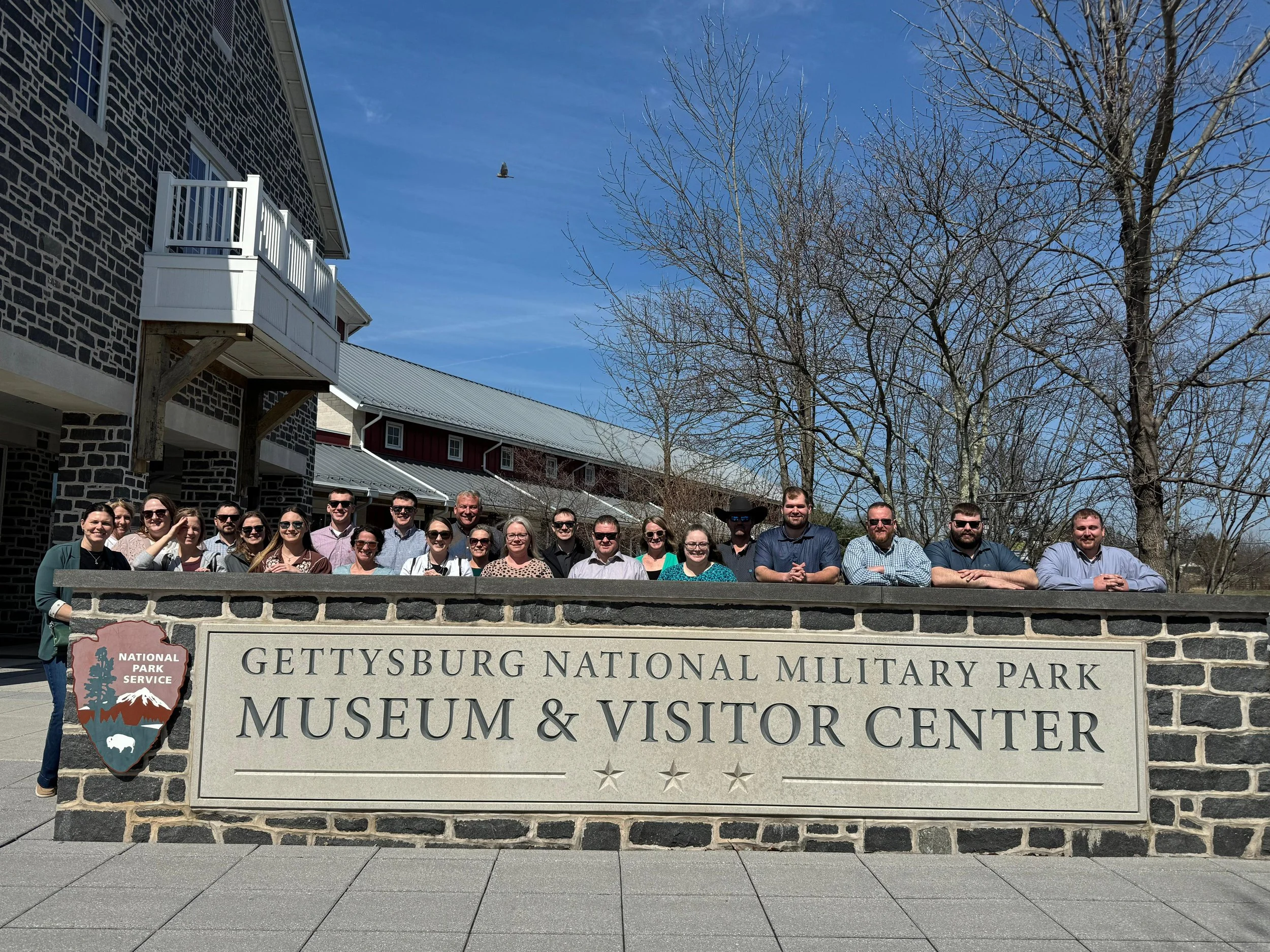
The first full day of learning centered on Gettysburg, where Class XIII explored how decision-making, communication, and leadership shaped outcomes during the largest battle of the Civil War. The day began at the Gettysburg National Military Park, Museum, and Visitor Center, where the class viewed the short film, “A New Birth of Freedom.” The film provided historical context leading up to the Civil War and the three-day Battle of Gettysburg. It also emphasized the immediate and long-term consequences, including the effect on the soldiers, civilians, and the social and physical rebuilding that followed for generations.
Following the film, the class viewed the “Battle of Gettysburg” cyclorama, a massive 377-foot, 8-ton oil painting depicting the third day of the battle. Accompanied by a voice-over narration and light show presentation, the exhibit challenged Class XIII and the other visitors to consider what motivated the soldiers to follow, and what compelled the commanders to make the decisions they made when the cost of the battle was still unknown. The presentation highlighted the reality that commanders were able to motivate men to charge forward despite the near certainty of death, prompting reflection on leadership and responsibility. It also made a point that while the Civil War is often framed solely around the abolition of slavery, motivations were also deeply tied to self-governance and preservation of a way of life.
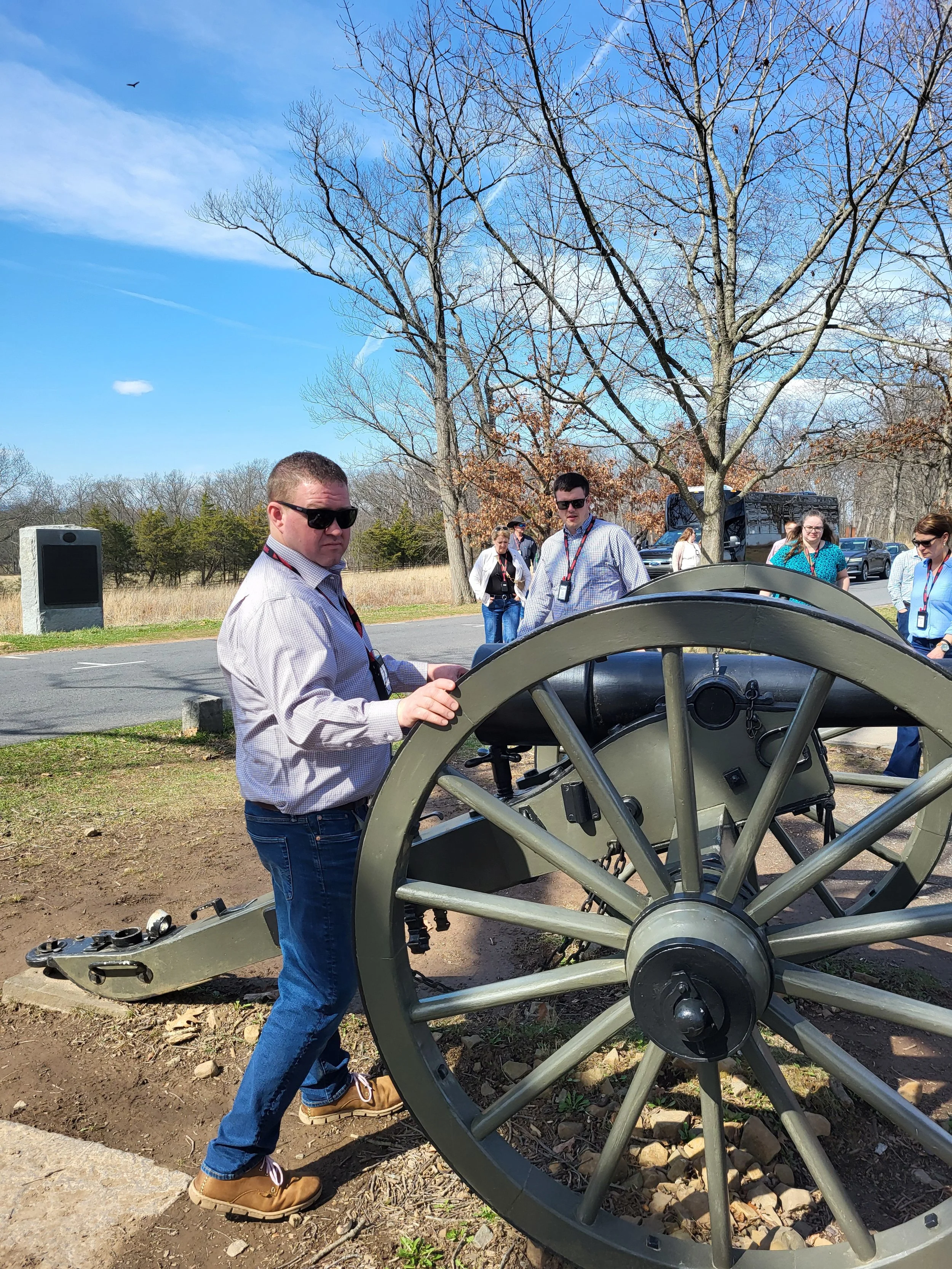
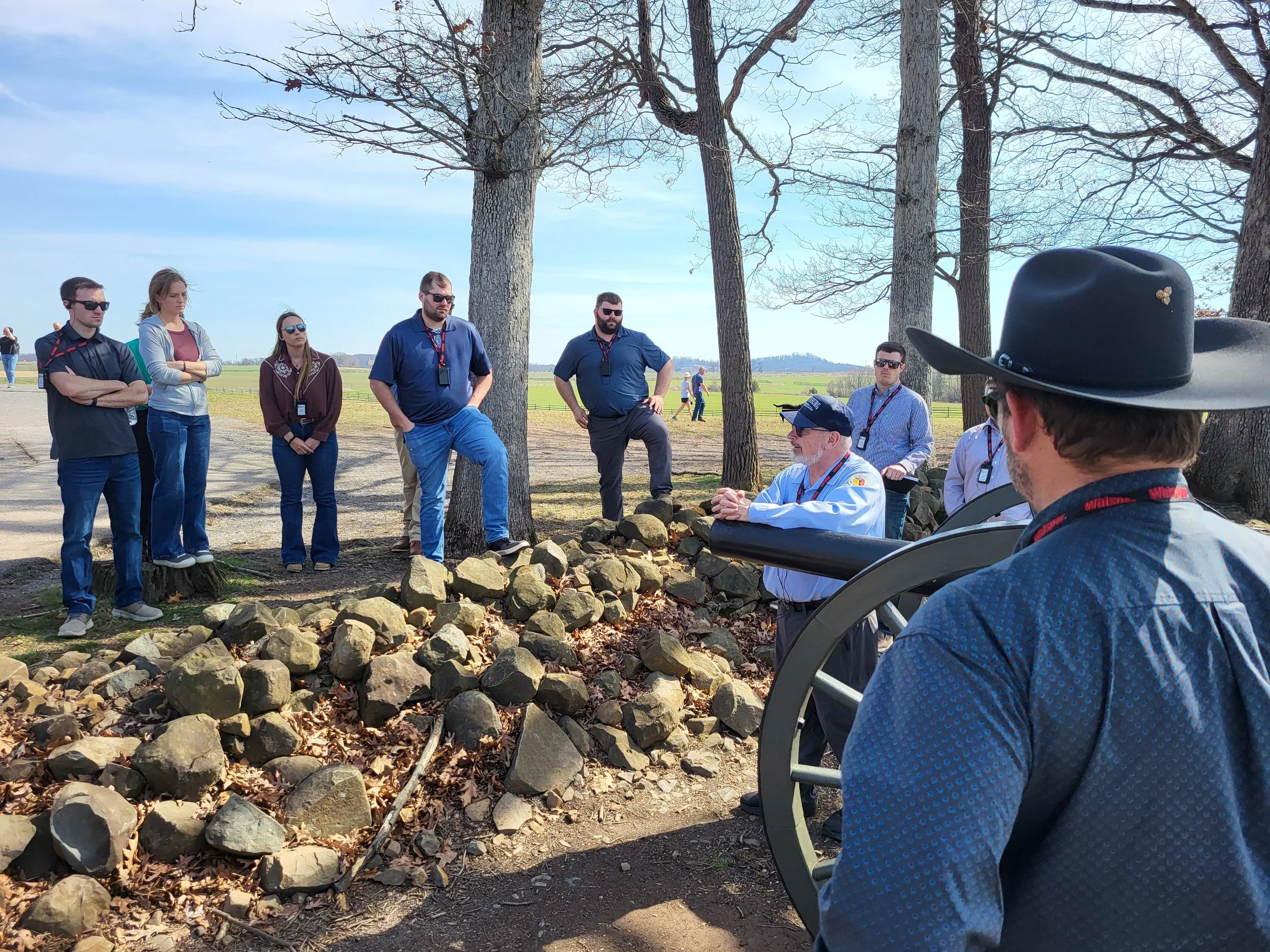
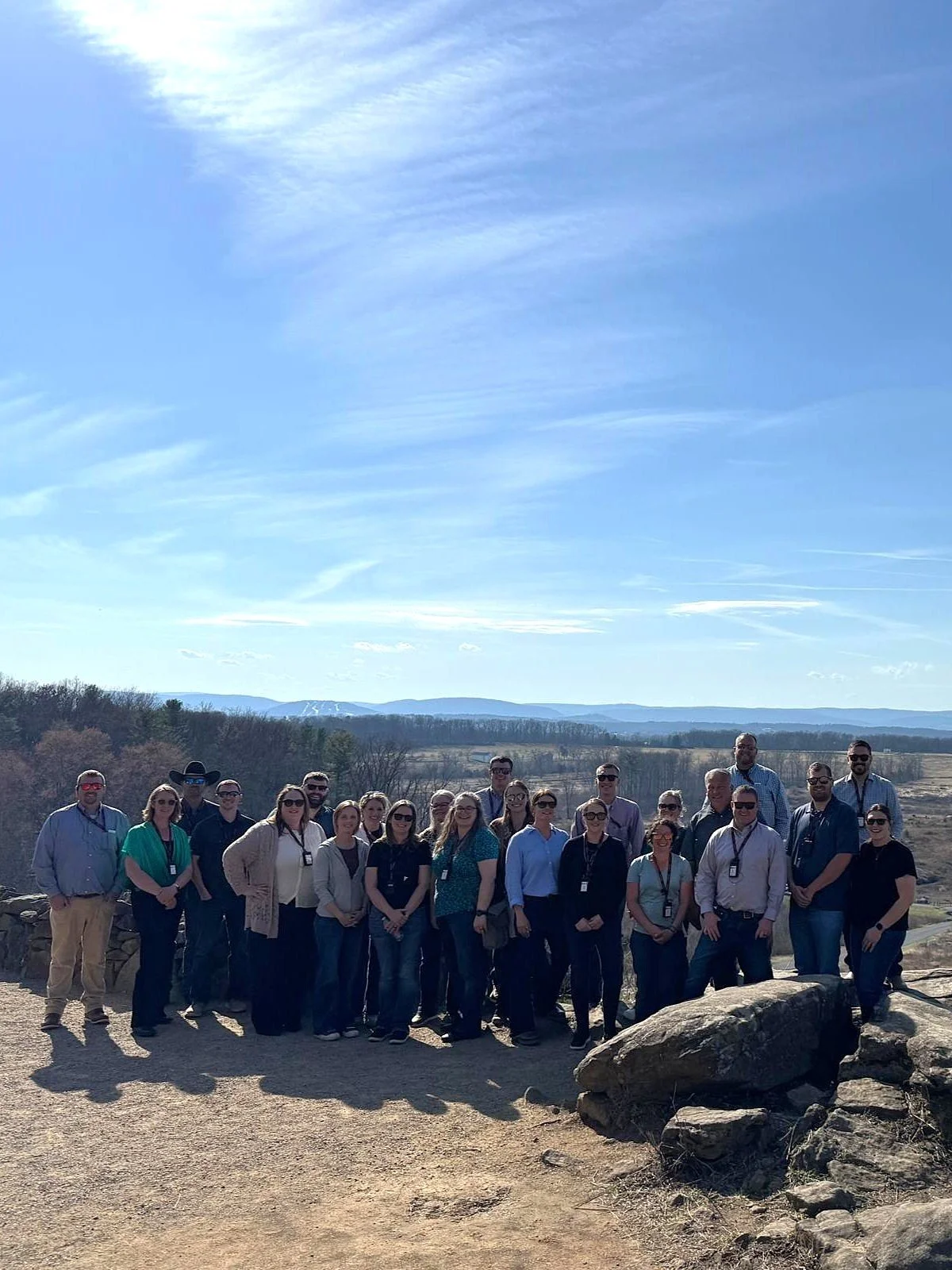
In the afternoon, Class XIII toured the Gettysburg battlefield with Licensed Battlefield Guide Chris Army, whose energy and expertise provided an insightful experience. Rather than simply recounting events, Mr. Army emphasized how leadership styles, planning, and adaptability directly influenced the outcome of the battle. One key theme he discussed was succession planning. During the Civil War, commanders were frequently killed or mortally wounded, making it critical to have capable leaders already identified and prepared to step in. Mr. Army noted that effective leaders not only identify successors but also develop them intentionally and ensure they understand their role before a transition is required.
Another leadership lesson centered on the importance of communication clarity. Mr. Army described instances where contradictory orders, which he described as “diametrically opposed commands,” such as directing troops to make an offensive attack yet maintain a defensive position, created confusion among soldiers. These examples reinforced the importance of clear, consistent messaging. He also emphasized the need for contingency planning, reminding the class that strong leaders trust their teams to act with the information provided while remaining flexible enough to pivot when conditions change.
The day concluded with dinner at the historic Dobbin House, the oldest building in Gettysburg, built in 1776. The setting offered ties to history with its location within view of the site of President Lincoln’s famous Gettysburg Address and included a role in the Underground Railroad when the building was used to hide freedom seekers escaping enslaved conditions. Following dinner, Seminar Team Leader Sam Schaunaman delivered a public speaking presentation focused on lobbying, drawing comparisons between state and federal efforts. Sam highlighted that while lobbying is far more prevalent at the national level, it is also more heavily regulated under the Lobbying Disclosure Act and the Open Government Act. He contrasted South Dakota’s face-to-face advocacy approach with the federal government’s increased reliance on digital tools to efficiently reach all 535 members of Congress. His remarks prompted discussion around influence, transparency, and the ethical responsibilities of those seeking to shape public policy.
As the day wrapped up, class members shared professional and personal updates before boarding the bus to travel on to Washington, DC.
Day 3 (3/23/26) by Seminar Reporter Brandon White
Class XIII’s first full day in Washington, DC, focused on understanding how agricultural policy is shaped, communicated, and defended at the national level. Through conversations with commodity organizations and advocacy professionals, the class learned about current policy priorities and advocacy strategies at the federal level.
The morning began at the National Pork Producers Council office with government relations briefings from national commodity organizations. Wayne Stoskopf, Senior Director of Public Policy of the National Corn Growers Association, emphasized that profitability remains the central issue for farmers nationwide. The highlighted priorities for NCGA are to increase domestic demand through year-round E15 ethanol use and to increase international demand through trade agreements such as USMCA.
Next, Maria Zieba, National Pork Producers Council VP of Government Affairs, and Kelcy Schaunaman, Manager of Competition, Labor, and Tax, outlined the pork industry’s reliance on exports, particularly to Mexico and other free trade agreement partners. With exports facing pressure from tariffs and geopolitical uncertainty, they emphasized the importance of defending existing markets, maintaining USMCA, and continuing to pursue higher-value opportunities for pork products.
Carson Fort, American Soybean Association Government Affairs Manager, reinforced the interconnected nature of agriculture, noting that policy outcomes affecting one commodity frequently affect others. With soy exports at their lowest levels since 2019–2020, Fort highlighted the importance of trade stability, biofuels policy, and federal food labeling uniformity. Rising input costs, regulatory pressures, and public skepticism of seed oils contribute to the growing challenge of navigating market forces.
The final speaker of the morning, Hunter Ihrman, National Cattlemen’s Beef Association Executive Director of Strategic Engagement, emphasized the importance of relationship-building in Washington, DC, since farmers and ranchers represent only a small percentage of the population. Ihrman discussed priorities including estate tax relief, Farm Bill policy, and emerging parasite threats in the beef industry. His examples demonstrated how advocacy organizations must respond quickly and thoughtfully to remain effective in a rapidly changing media and political landscape.
During a brief lunch break, Seminar Team Leader Carter Paulson delivered a public speaking presentation. Carter reflected on influential people in his life and emphasized that strong leadership does not require having all the answers but rather good listening skills, genuine curiosity in others’ well-being, and being there for people as traits of great leaders.
In the afternoon, Class XIII attended sessions led by the American Farm Bureau Federation. The first speaker, Johnna Miller, Senior Director of Media & Advocacy Training, led a discussion on tackling tough topics, emphasizing that trust is foundational to agriculture’s “freedom to operate.” She explained that people rarely change their minds based on facts alone but rather on shared values, empathy, and active listening. Miller challenged the class to listen for what people want to know instead of focusing solely on what you want to tell them.
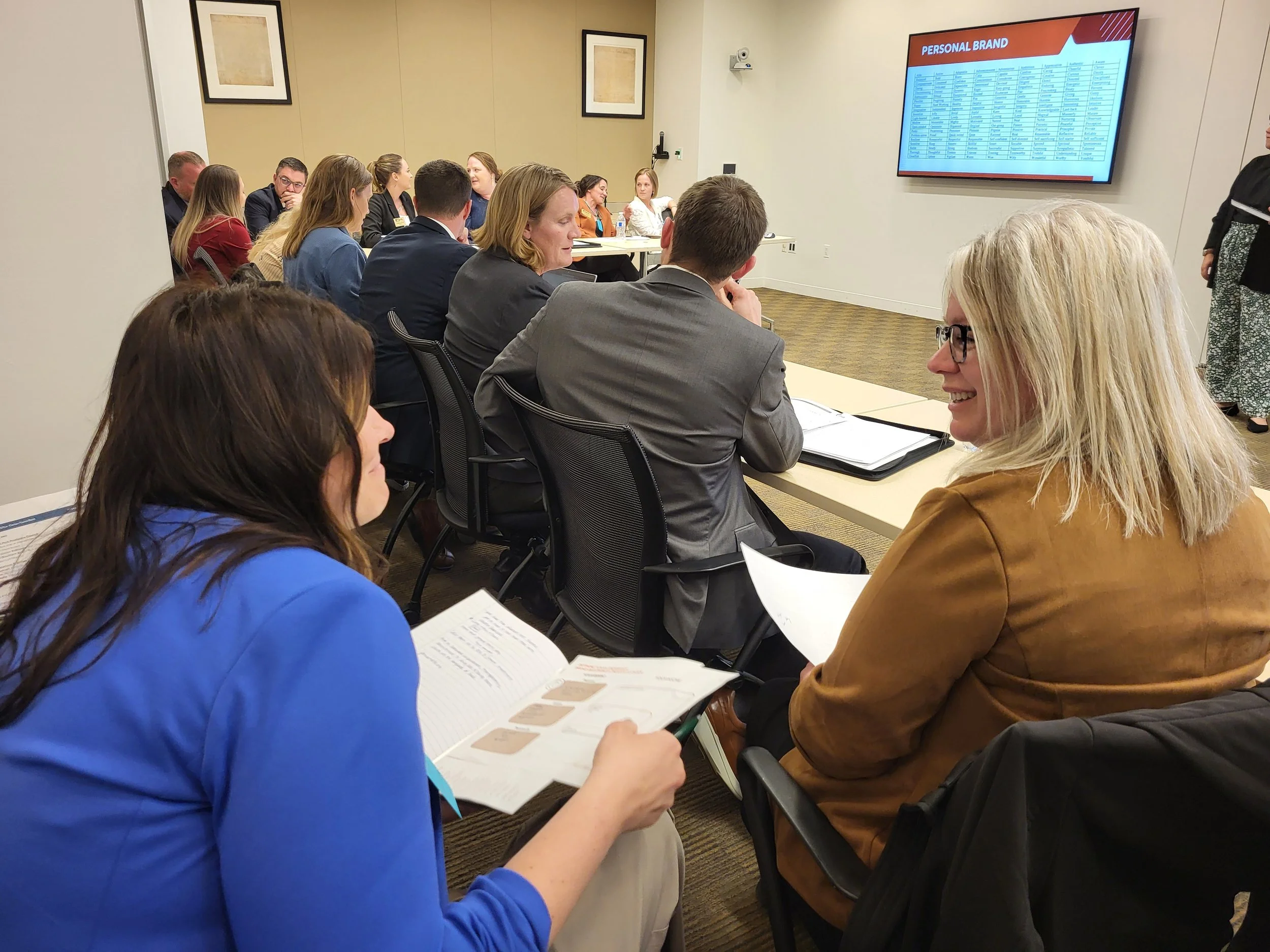
The next speaker, Maegan Meredith, Director of Leadership & Organizational Development, guided the class through a session on developing thought leaders in agriculture. She defined thought leadership as influence rooted in credibility, consistency, and purpose. Class members were encouraged to reflect on their own leadership brands and the markets where they can be most impactful. The session reinforced the importance of how good leaders interact with others.
The afternoon sessions concluded with advocacy training led by Tom Donnelly, Senior Director of Advocacy & Grassroots Program Development. He emphasized storytelling as a powerful advocacy strategy, telling the class that personal stories travel further and resonate longer than facts and numbers alone. He encouraged class members to view themselves as resources for policymakers to offer solutions for topics that are important to them.
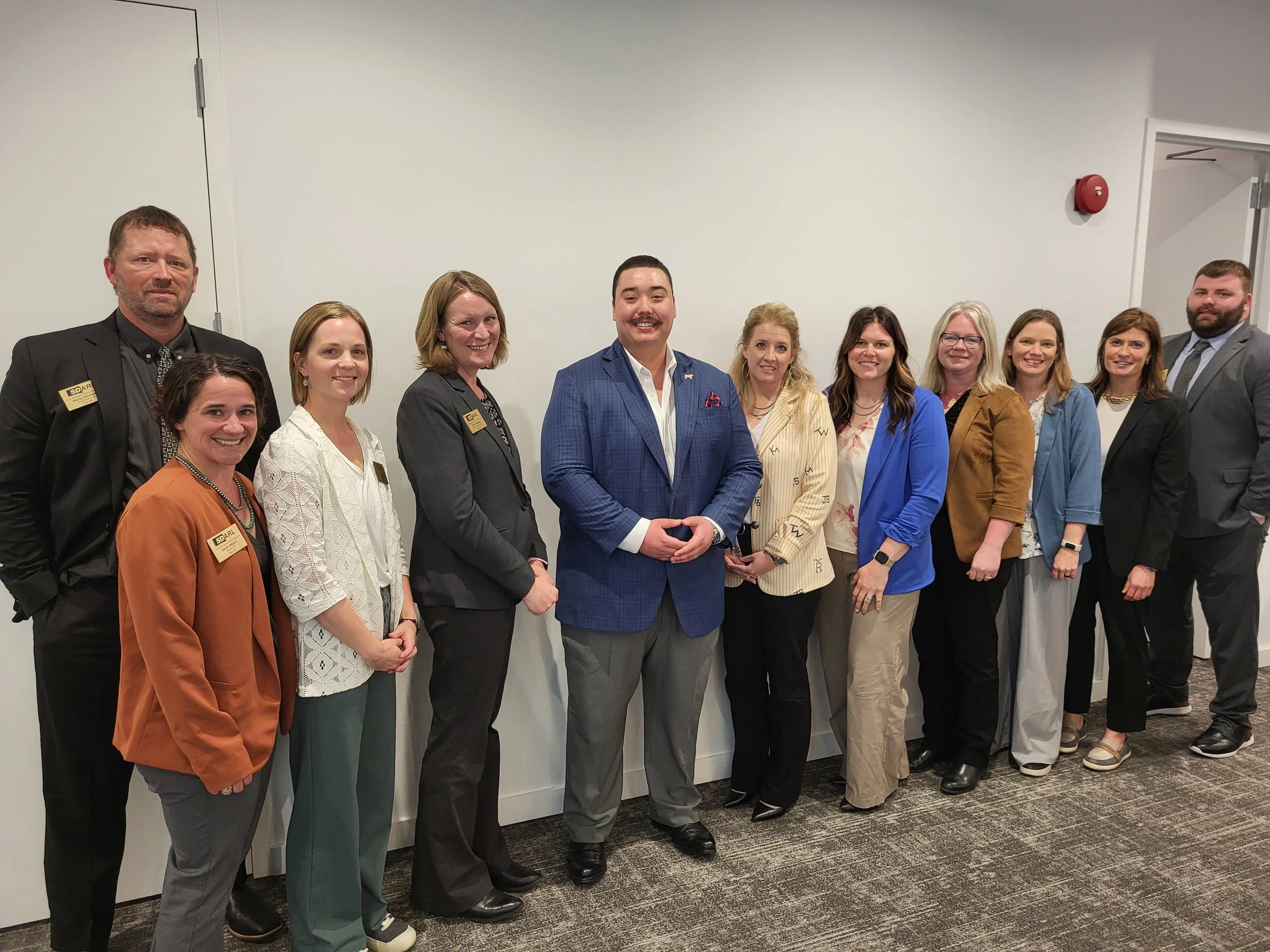
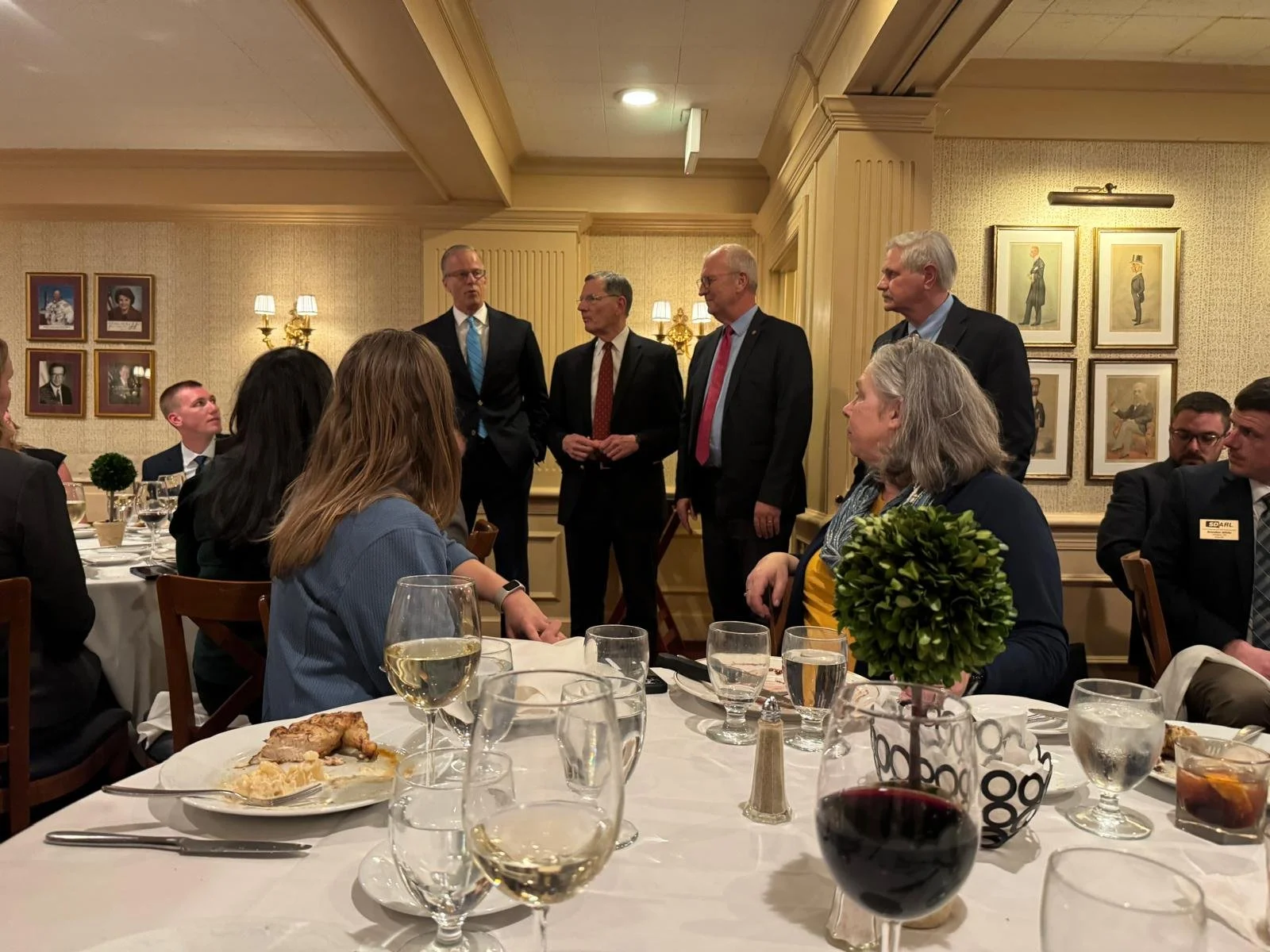
To wrap up the day, Class XIII joined leaders from Edge Dairy Farmer Cooperative and SDARL alumni for a dairy industry dinner at the Monocle restaurant near Capitol Hill. The gathering reinforced the value of SDARL’s network and the importance of maintaining connections across agricultural sectors and geographical regions. As the day came to a close, Senate Majority Leader John Thune briefly stopped by to address the group, offering his appreciation and encouragement as the class continues its leadership journey.
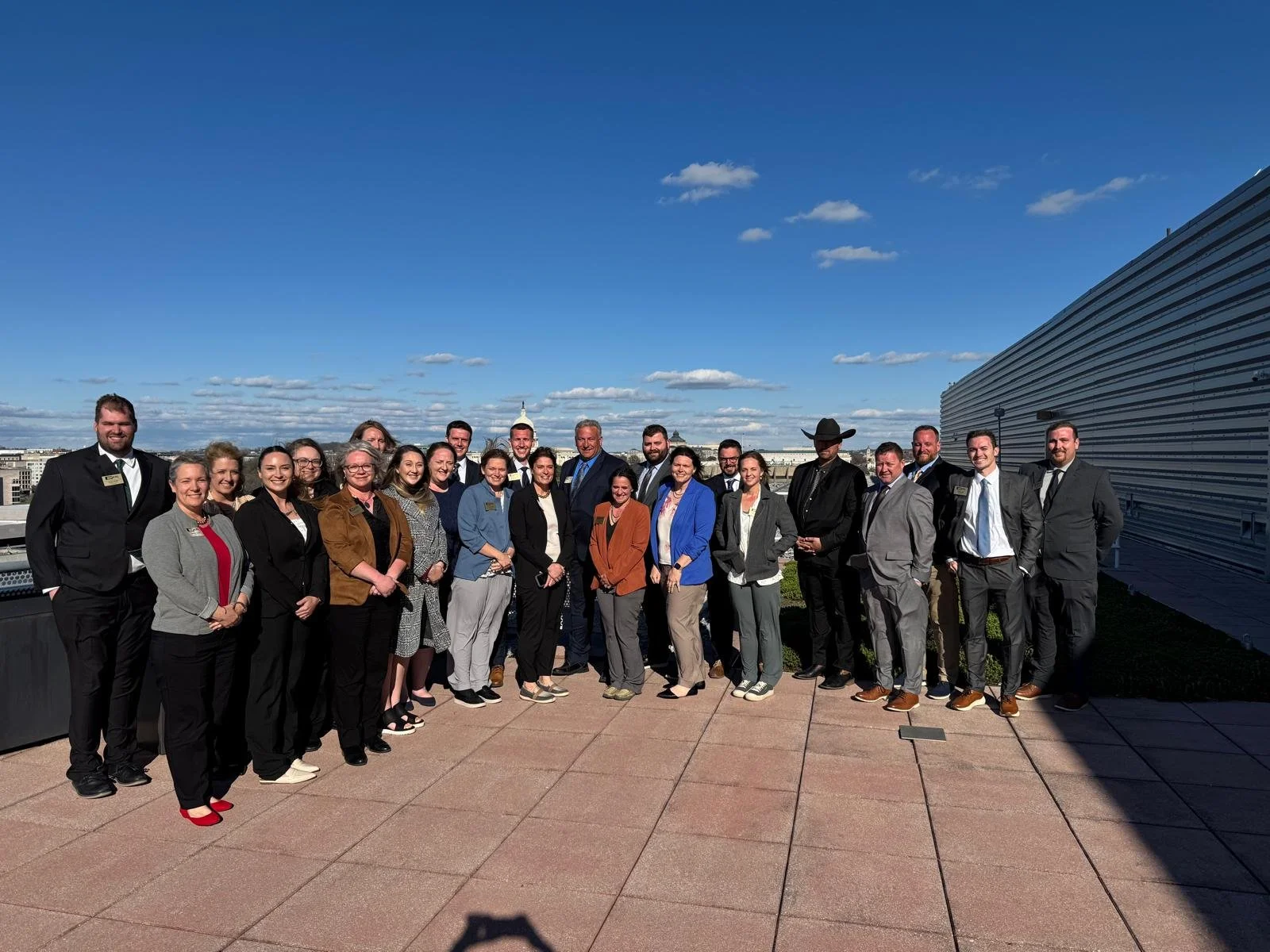
Day 4 (3/24/26): Finding Common Ground Through Advocacy and Understanding by Seminar Reporter Amanda Bechen
In preparation for this seminar, Class XIII engaged with the film Purple: America, We Need to Talk and the book The Killer Angels, both of which set the stage for today’s discussions. Each highlights a central truth about our nation: while America has a rich history of people coming together for the betterment of all, it also has a history marked by division and discourse. Throughout our SDARL experience, we have explored both our individual and shared values, recognizing how those values shape decisions in our homes, communities, and workplaces. As we step into the civic process, it is critical not only to understand what we believe, but also to approach conversations with openness and a willingness to learn from differing perspectives.
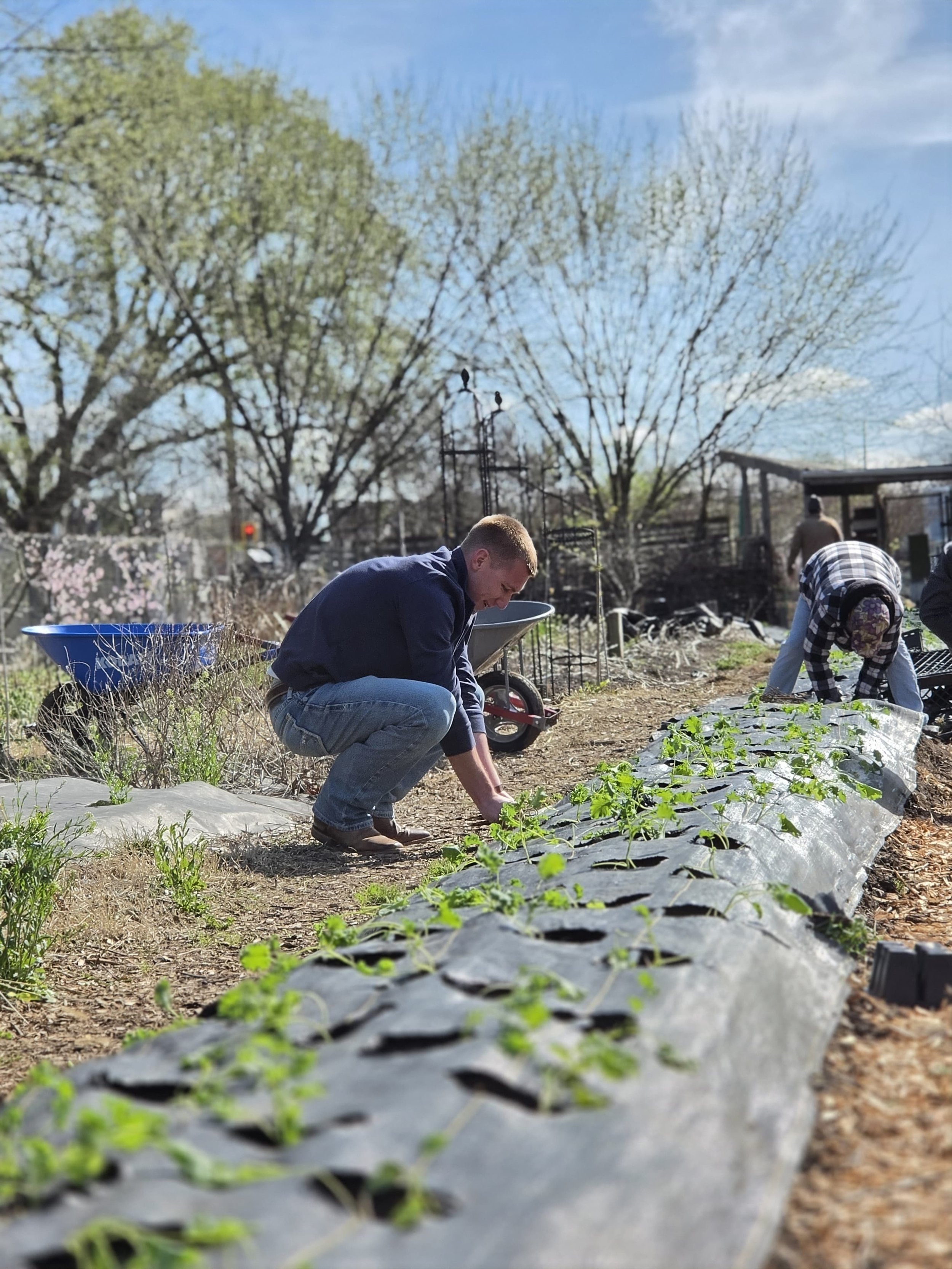
One of Class XIII’s shared values is Learning, defined as “being prepared and present and keeping an open mind even when ideas differ from your own.” This value was put into practice on Tuesday morning during Learning Discussions with special interest groups. These visits were designed to deepen our understanding of each organization’s beliefs, tactics, and goals. Class members prepared by researching organizations aligned with their interests and coordinating meetings in advance, ensuring meaningful and intentional conversations.
Building on prior training at the American Farm Bureau Federation, where we focused on reading body language and engaging in constructive dialogue, we approached these discussions with clear expectations. Our goal was not to change minds, but to better understand perspectives different from our own and identify areas of common ground.
Class XIII members met with a range of organizations, including Lederer Gardens, the Environmental and Energy Study Institute, the Union of Concerned Scientists, the Good Food Institute, and the Animal Welfare Institute. Across these conversations, a consistent theme emerged: even when perspectives differ, shared goals often exist. Annie Walker, a Class XIII cattle producer who visited the Animal Welfare Institute, reflected, “It was eye-opening to see that we as cattle producers do align with some of the same goals they have.” This sentiment was echoed by many in the class. The experience reinforced the importance of initiating dialogue rather than relying on assumptions or incomplete information.
While the class participated in these discussions, additional members attended the National Ag Day event at the USDA, centered on the theme “Agriculture: Together We Grow” and celebrating 250 years of agricultural progress. Secretary of Agriculture Brooke Rollins highlighted the resilience of the agricultural sector and announced a new “Product of USA” labeling awareness campaign for meat, poultry, and egg products. Remarks from leaders, including EPA Administrator Lee Zeldin and Health and Human Services Secretary Robert F. Kennedy Jr., further emphasized the broad impact of agriculture across sectors.
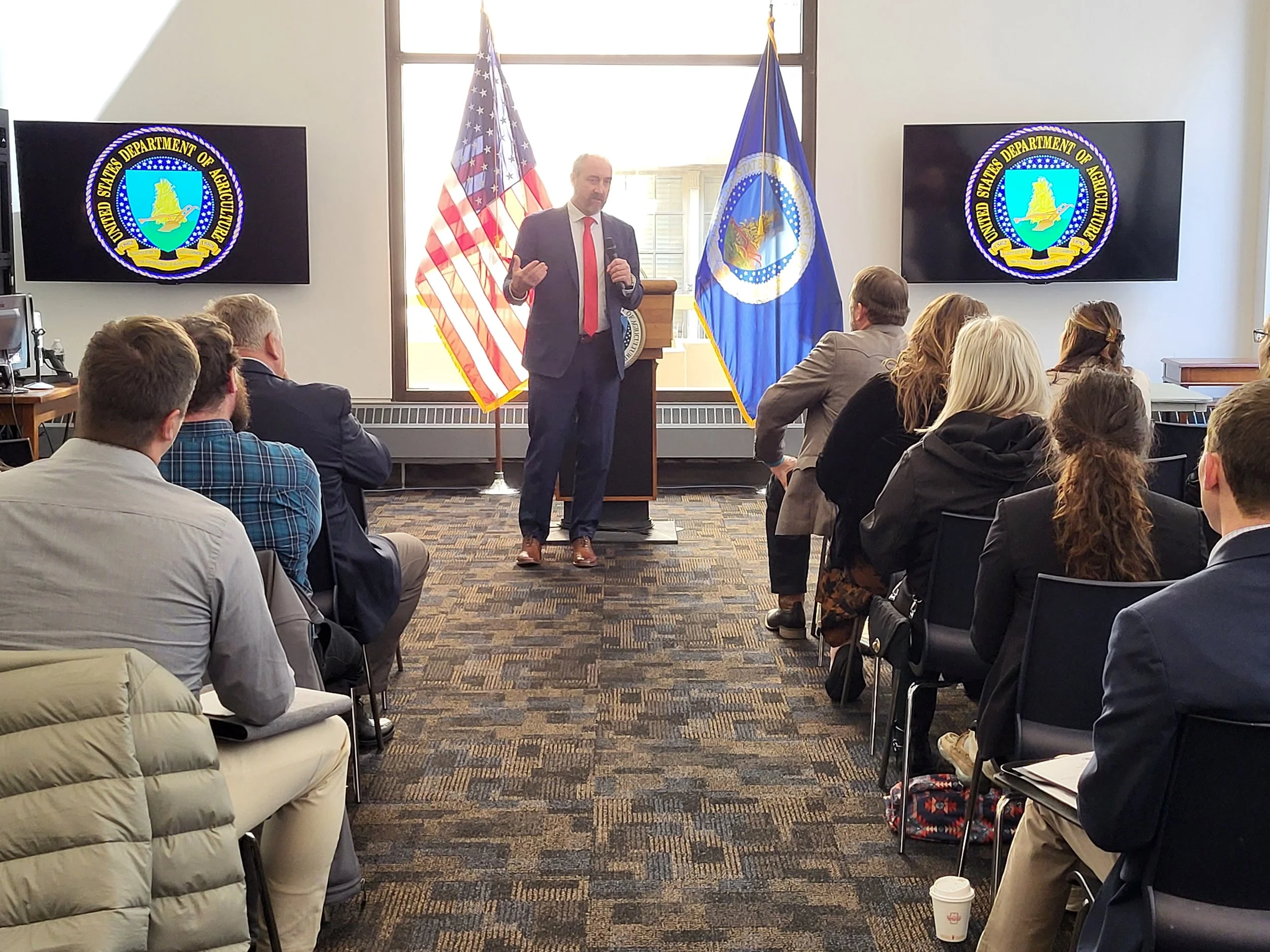
The afternoon brought the class together with Rural Leadership North Dakota at the United States Department of Agriculture. Engaging with our counterparts provided valuable insight into shared challenges and opportunities across states, reinforcing the interconnected nature of rural leadership.
During our time at USDA, we heard from a range of leaders representing key divisions within the department. Discussions highlighted both the complexity of the agency and its evolving approach to serving agricultural stakeholders. As USDA continues to decentralize operations into regional hubs, the intent is to better align resources with the needs of producers. As Steve Messeh, Acting Director, Office of Partnerships and Public Engagement, noted, meaningful impact is achieved by being “close to the needs of the people.” This shift reflects a broader recognition that effective service requires proximity to the communities being served.
Trade and global engagement also emerged as critical components of agricultural success. Michelle Bekkering, Deputy Under Secretary for Trade / Foreign Agricultural Service, emphasized the importance of “winning minds and market share” internationally, underscoring the role of strategic relationships and collaboration in expanding opportunities for U.S. agriculture. Similarly, updates on modernization efforts across USDA signaled a commitment to improving efficiency and outcomes for producers through better use of time and resources.
A common thread throughout the day was the importance of connection – whether through dialogue with differing viewpoints, collaboration across agencies, or engagement in global markets. Advocacy, as demonstrated through these experiences, is not solely about promoting a position, but about understanding context, building relationships, and working toward shared outcomes.
The day concluded with an opportunity to continue building relationships over dinner with our North Dakota counterparts, followed by a Monuments by Moonlight tour. While the historical backdrop provided a meaningful reminder of our nation’s past, the greater takeaway from the day was the importance of engaging thoughtfully in the present.
Ultimately, Tuesday reinforced that effective advocacy begins with understanding. By approaching conversations with openness and a willingness to listen, we are better equipped to find common ground and contribute meaningfully to the future of agriculture and rural communities.
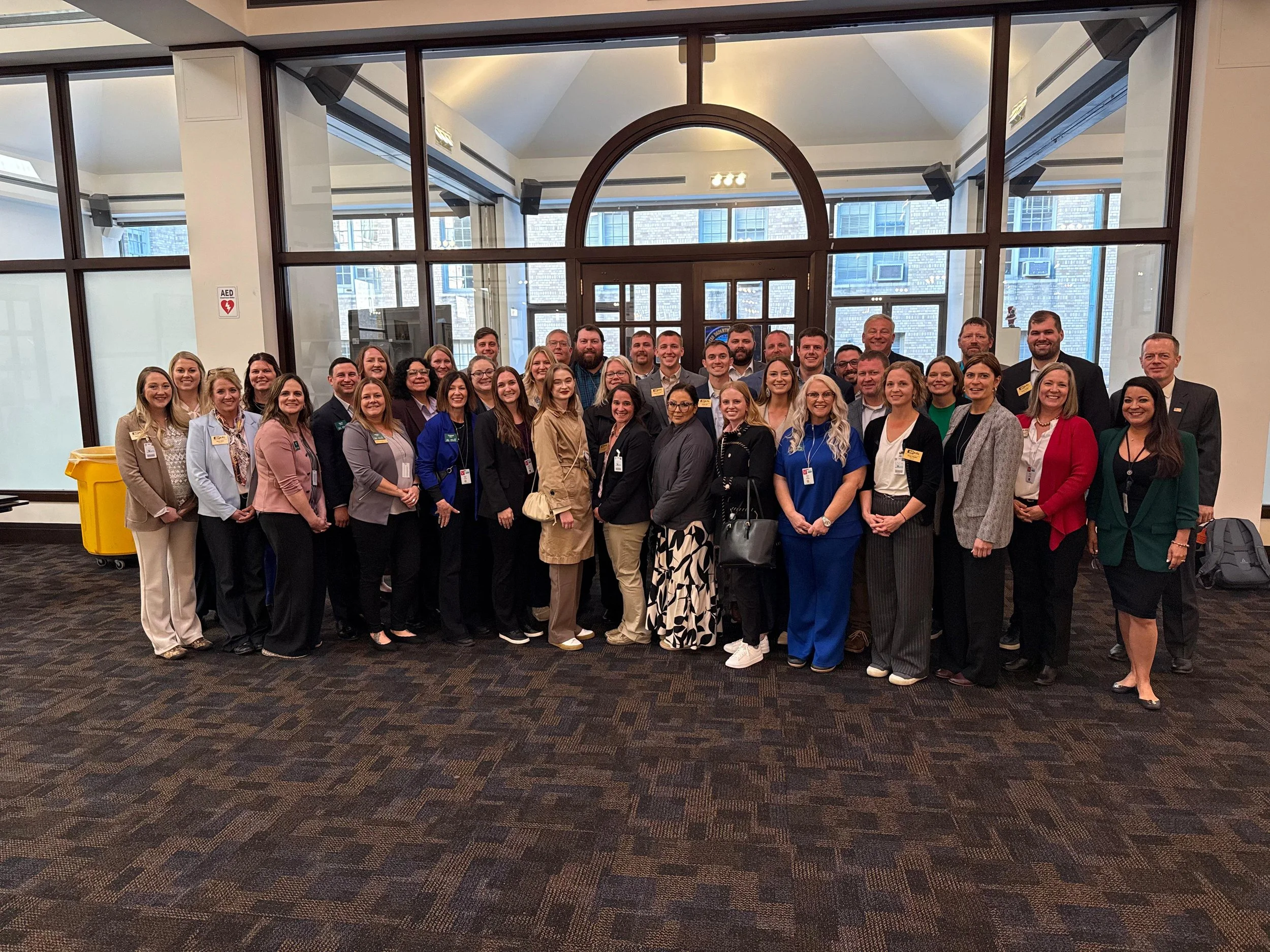
Day 5 (3/25/26): Class XIII Takes the High Ground on Capitol Hill by Seminar Reporter Amanda Bechen
If Gettysburg taught us anything, it is that taking the high ground is essential to winning a battle. In today’s context, the “high ground” can take on many meanings. It can represent integrity and honesty, a broader perspective that allows us to see the bigger picture, or a leadership approach rooted in engaging those in positions of influence to move important policies forward. On Wednesday, Class XIII stepped into that space, gaining firsthand insight into how leadership and advocacy intersect on Capitol Hill.
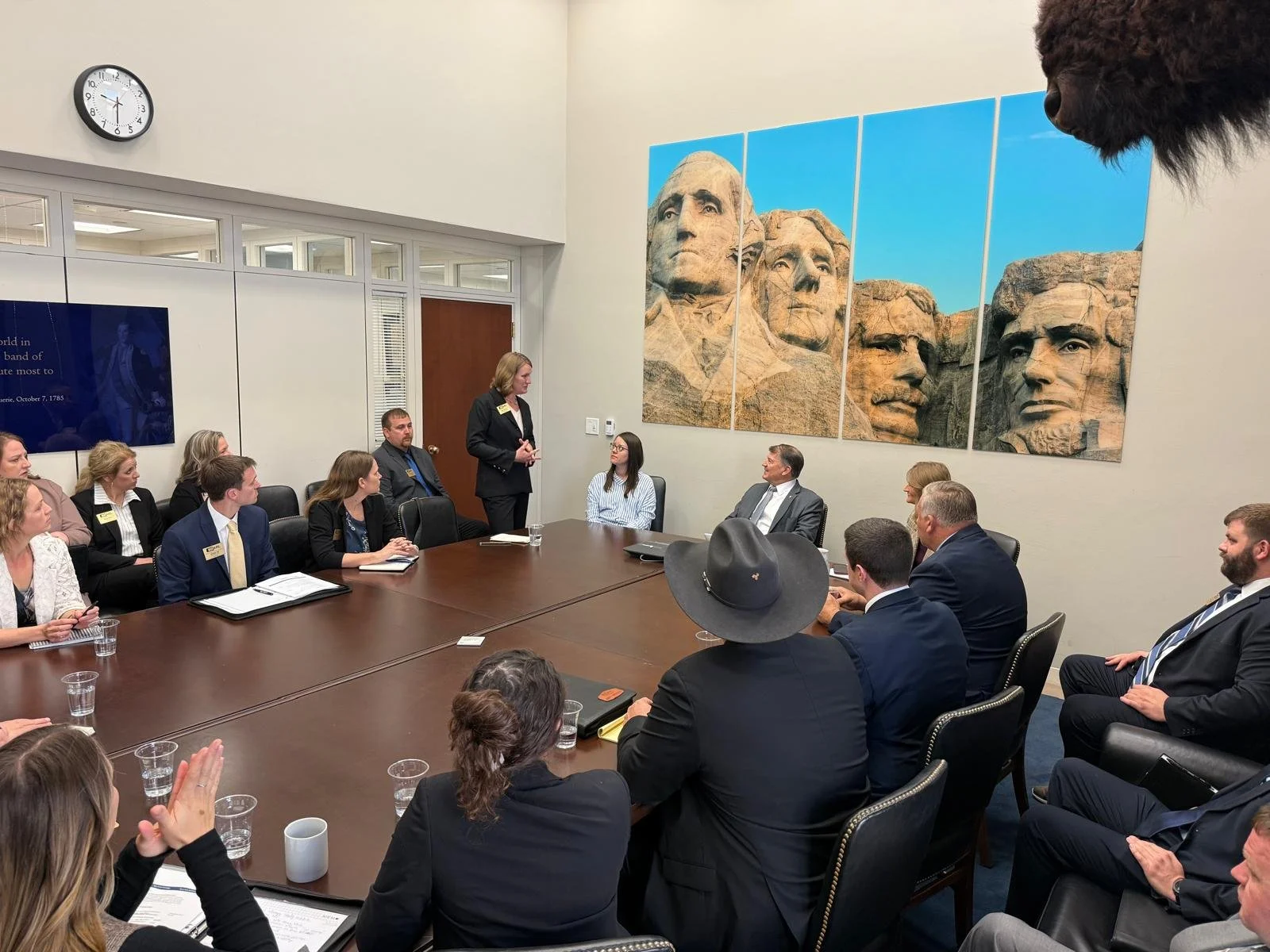
Our day began with Senator Mike Rounds, who provided a wide-ranging perspective on both domestic and global issues. He discussed how international conflicts, including tensions in Iran, can directly impact agriculture through fertilizer supply and fuel costs. His remarks highlighted the interconnected nature of global policy and local agricultural realities. He also spoke to the rapid rise of artificial intelligence, noting its transformative potential while cautioning that with increased access to information comes a greater responsibility to ensure its accuracy.
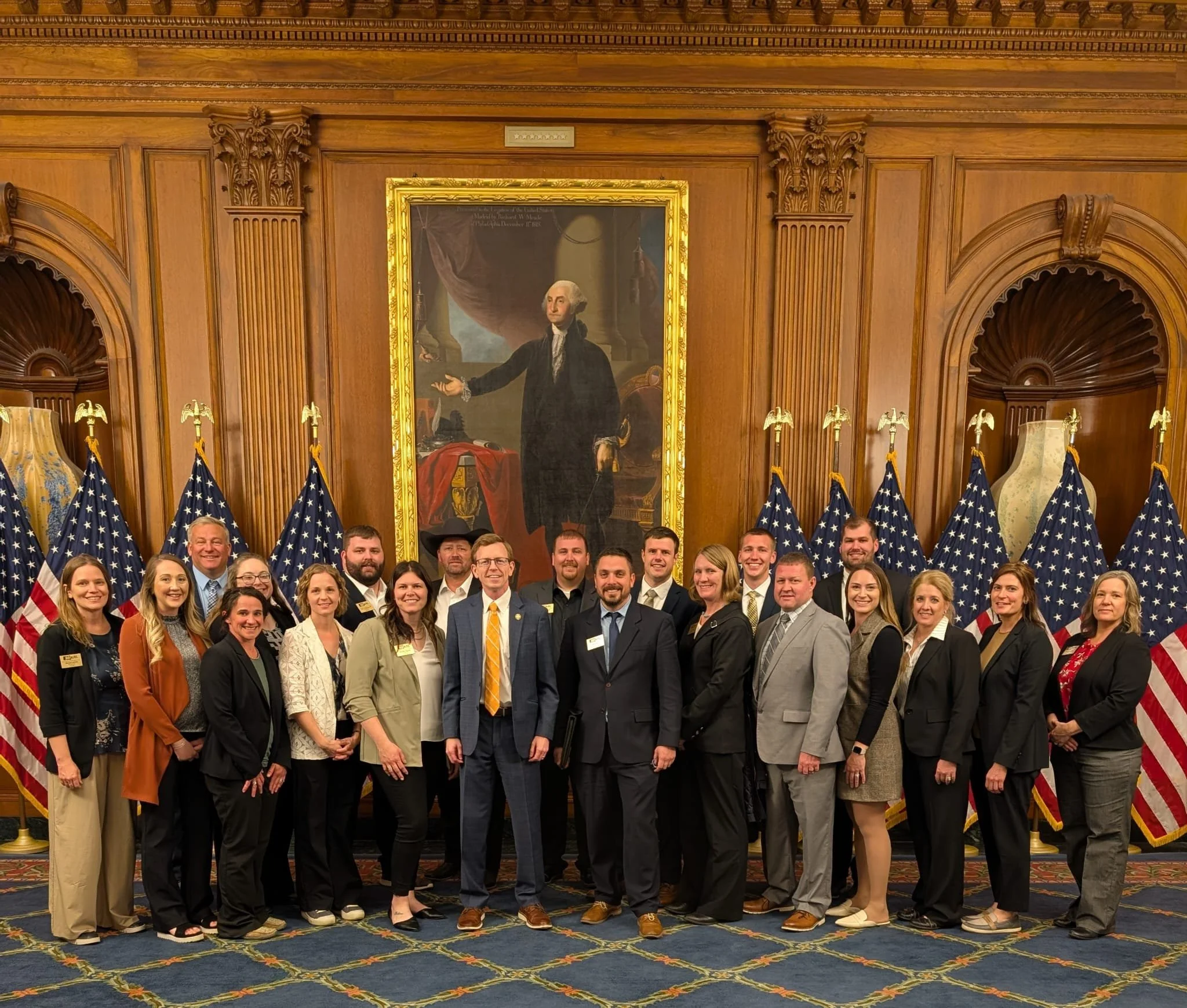
We then met with Representative Dusty Johnson, who offered insight into the current status of the Farm Bill and the legislative process. Traditionally a bipartisan effort, the Farm Bill has faced delays as portions of it were addressed in the One Big Beautiful Bill Act, reducing the urgency for immediate action. As Representative Johnson noted, “Deadlines drive achievement,” emphasizing how timing and pressure shape legislative progress.
Representative Johnson also addressed the evolving relationship between legislators and constituents. While modern communication tools have made engagement more accessible, he acknowledged that social media often rewards polarization and emotional appeals, contributing to division. His message to the class was clear: stay informed, stay engaged, and bring real-world experience into the conversation.
Our final meeting on the Hill was with Senate Majority Leader John Thune, who reinforced the importance of character in leadership. As legislation unfolded on the Senate floor, he spoke candidly about the challenges of governing in a highly polarized environment. His approach, working across party lines while leading with integrity, highlighted the importance of steady, principled leadership. As he shared, effective leadership is grounded in “character and integrity.”
Across each of these conversations, a common theme emerged: the increasing difficulty of finding middle ground in a polarized political landscape. Leaders are often incentivized to appeal to division rather than collaboration, yet meaningful progress depends on the ability to bridge those divides. This tension underscores the importance of thoughtful, informed advocacy.
Several additional reflections on leadership resonated throughout the day. We were reminded to “be voices of reason, common sense, and truth,” and to recognize and support those who are serving with integrity. One particularly memorable moment came when Leader Thune described his role by saying, “Being the Majority Leader is a lot like being a caretaker at a cemetery. There are a lot of people below you, but no one is listening.” The comment was both humorous and thought-provoking, offering insight into the realities of leadership at the highest levels.
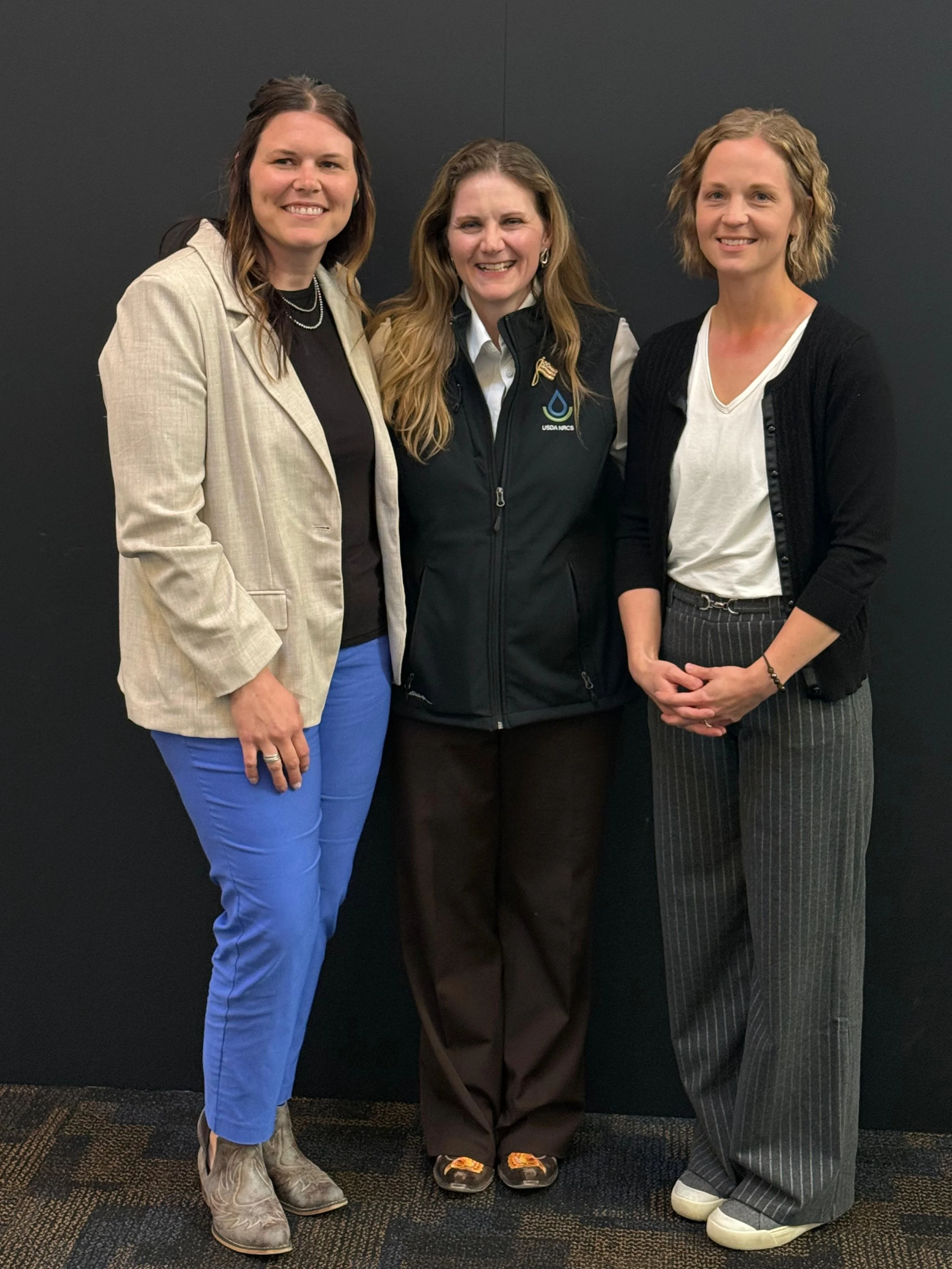
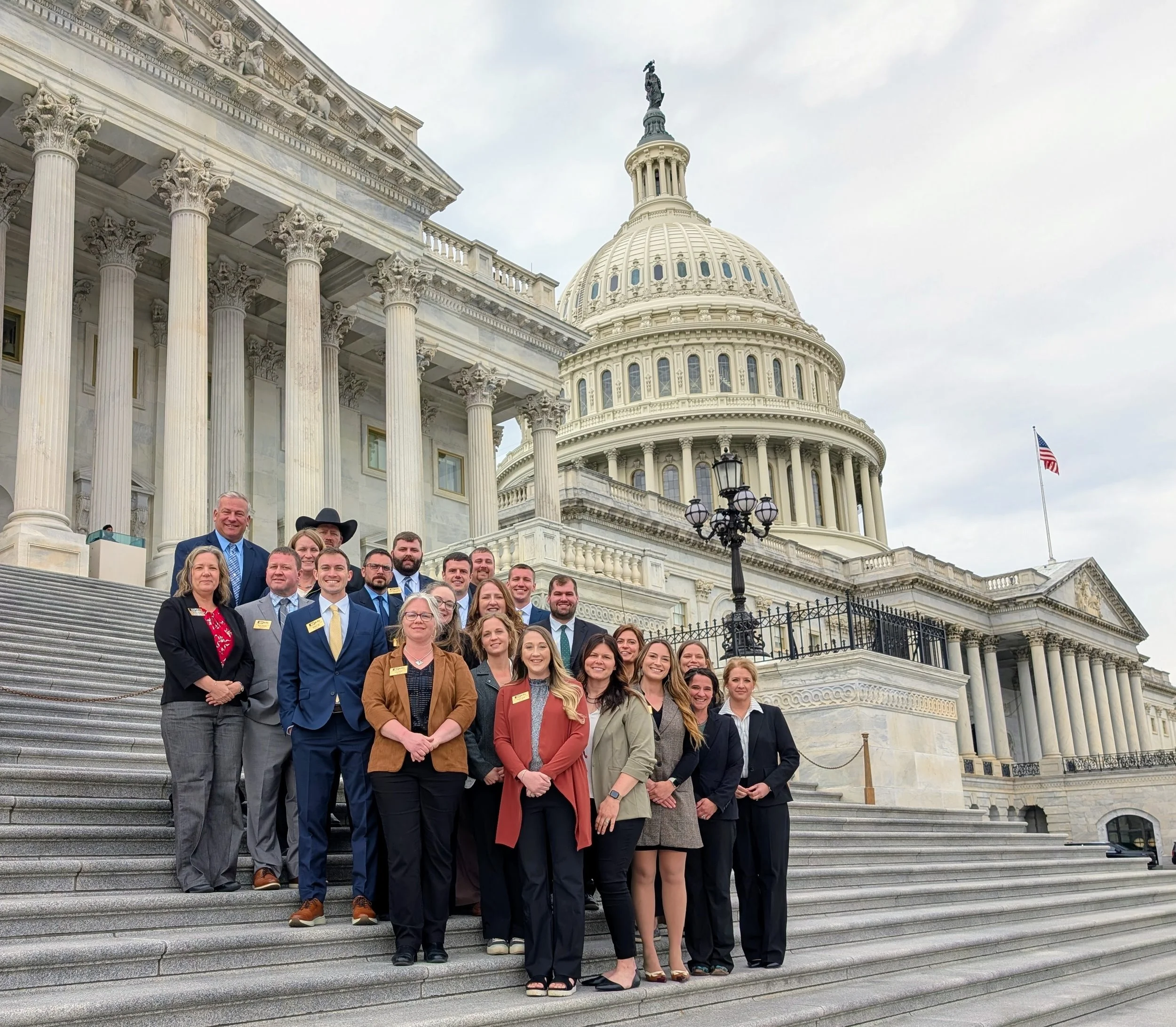
Beyond our formal meetings, the day offered opportunities to connect and reflect. We were grateful to encounter the Women in Dairy Leadership cohort on the Capitol steps and to share in the broader network of agricultural leaders. Later, over dinner, Seminar Team Leader Tami Hannan shared her personal journey in advocacy and leadership. Her story of stepping into an unexpected leadership role and overcoming self-doubt served as a powerful reminder that leadership opportunities often arise when we least expect them and that growth comes from stepping forward.
The evening concluded with a private tour of the Capitol led by Representative Johnson. Experiencing these historic spaces firsthand added depth to our understanding of leadership and governance. Standing on the floor of the U.S. House of Representatives, the class reflected on the weight of that space and the generations of decisions that have shaped our nation. From the crosses etched into the stairwell during the War of 1812 to the agricultural imagery woven throughout the building’s architecture, the Capitol serves as a powerful reminder of our nation’s history and its deep ties to agriculture.
As we left the Capitol, Class XIII carried forward a deeper appreciation for what it means to “take the high ground.” Leadership in today’s environment requires more than strong opinions, it demands integrity, perspective, and a willingness to engage across differences. For those of us in agriculture and rural communities, it is a reminder that our voices matter, and that meaningful advocacy begins with both understanding and action.
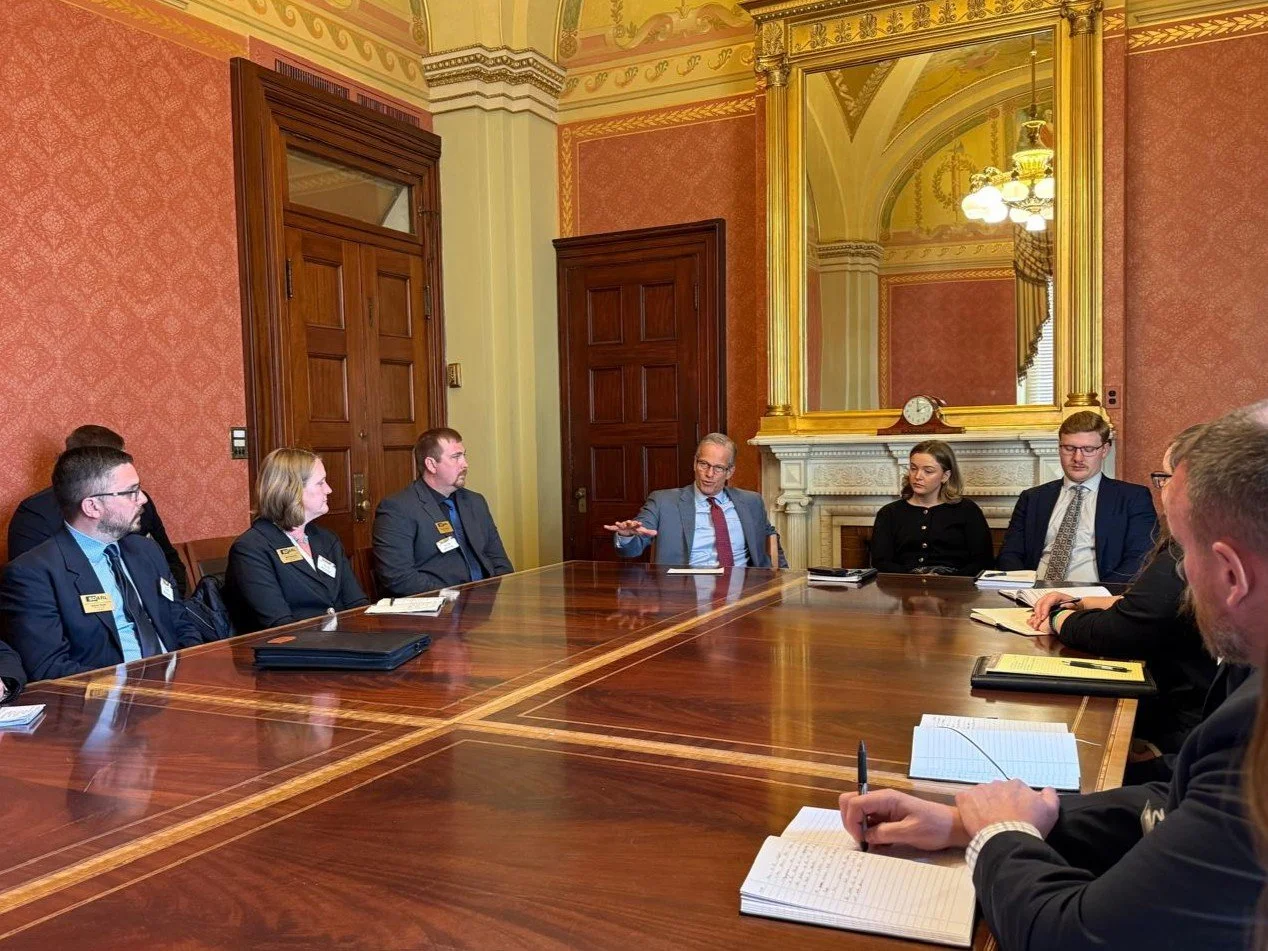
Photos courtesy of Brooke Higgins, Jarod Weber, SDARL, and Senator Thune’s Office
Special thanks to Seminar Team Leaders Carter Paulson, Sam Schaunaman, and Tami Hannan
Special Extension: SDARL at the White House
Two SDARL members had the opportunity to stay an extra day in Washington, DC, for a visit to the White House’s Celebration of Agriculture on March 27. Tami Hannan and Craig Converse of Class XIII joined producers from across the country for an Ag Appreciation event on the South Lawn, where the new Product of USA program was detailed.
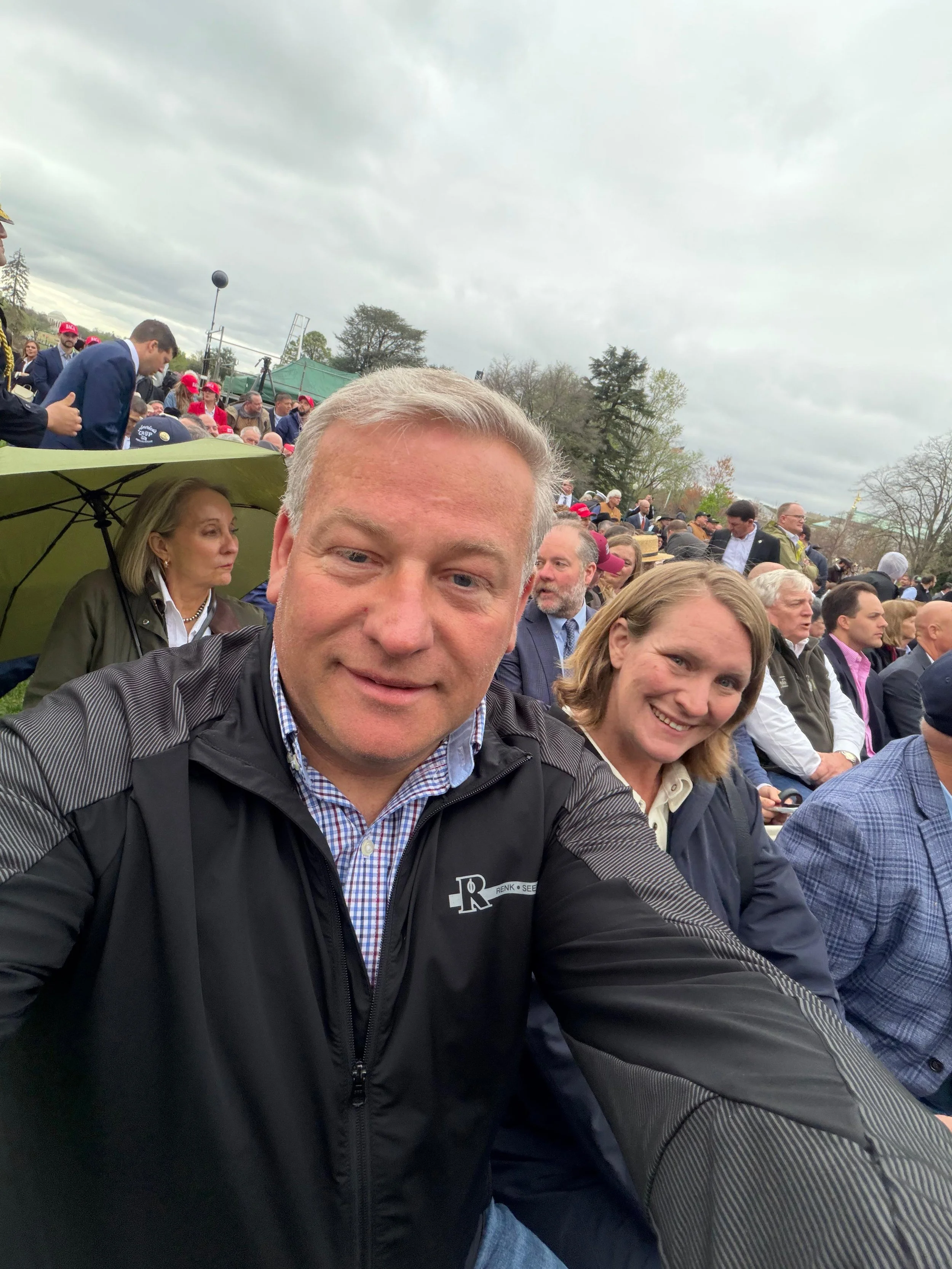
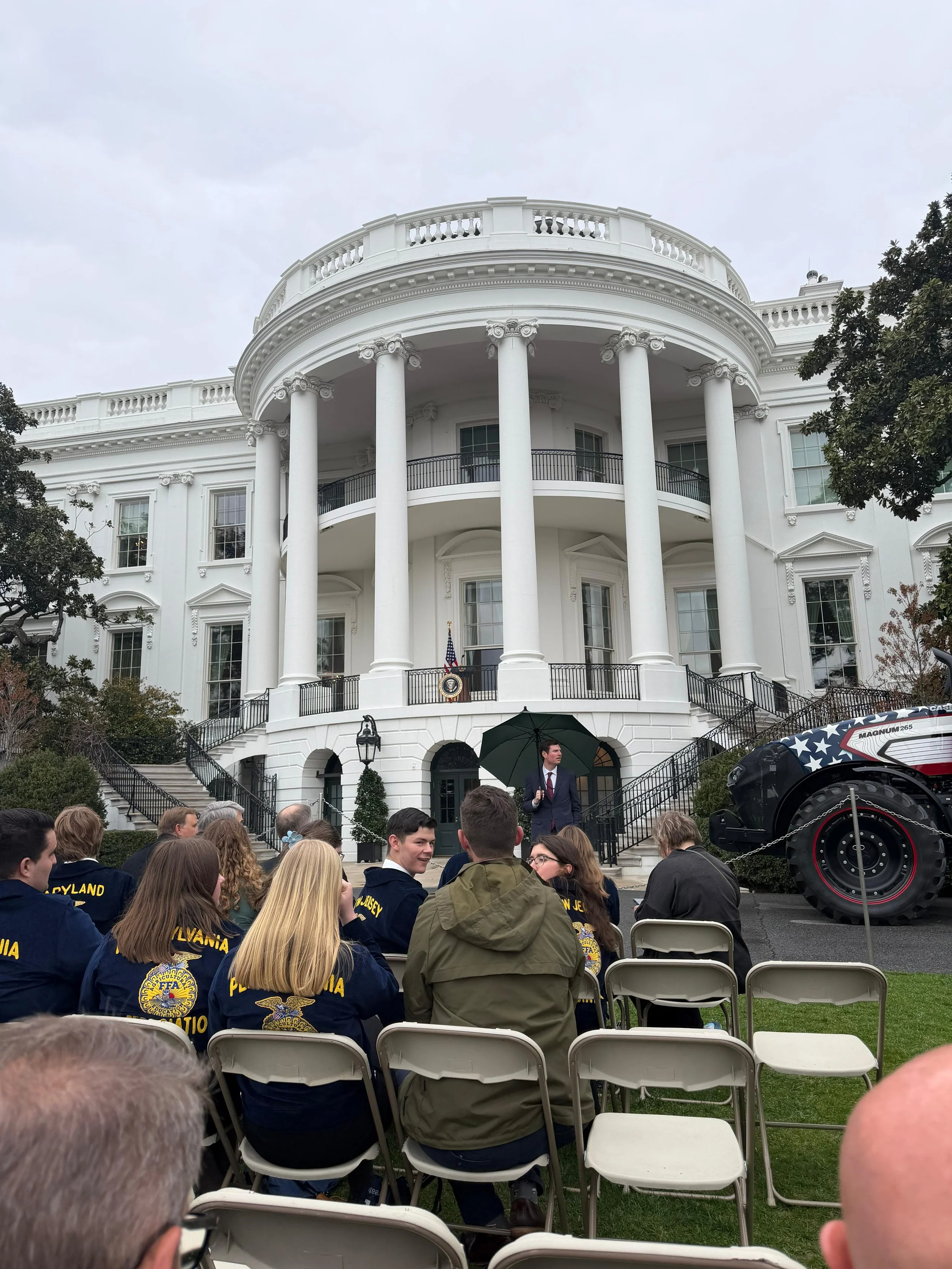
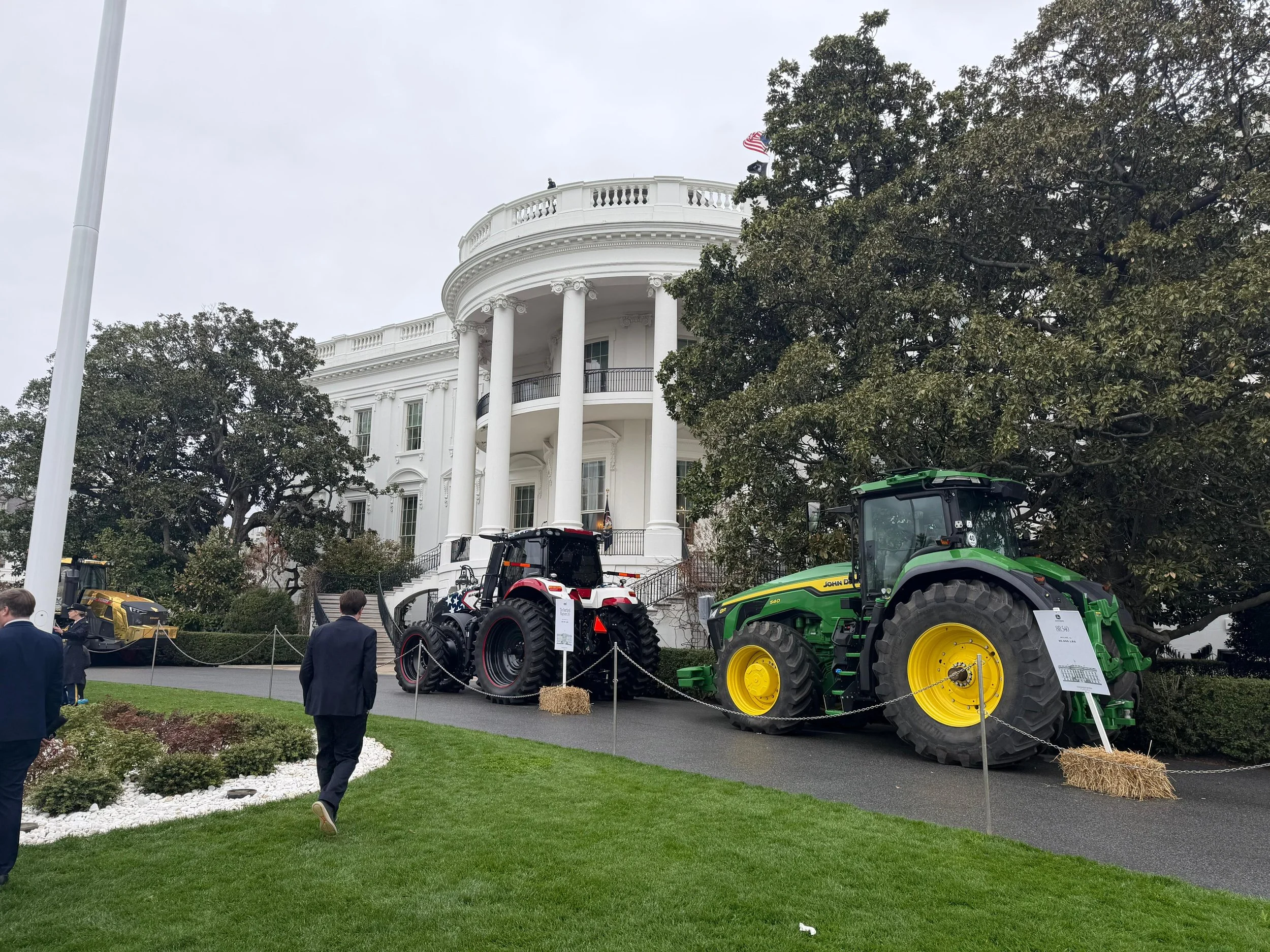
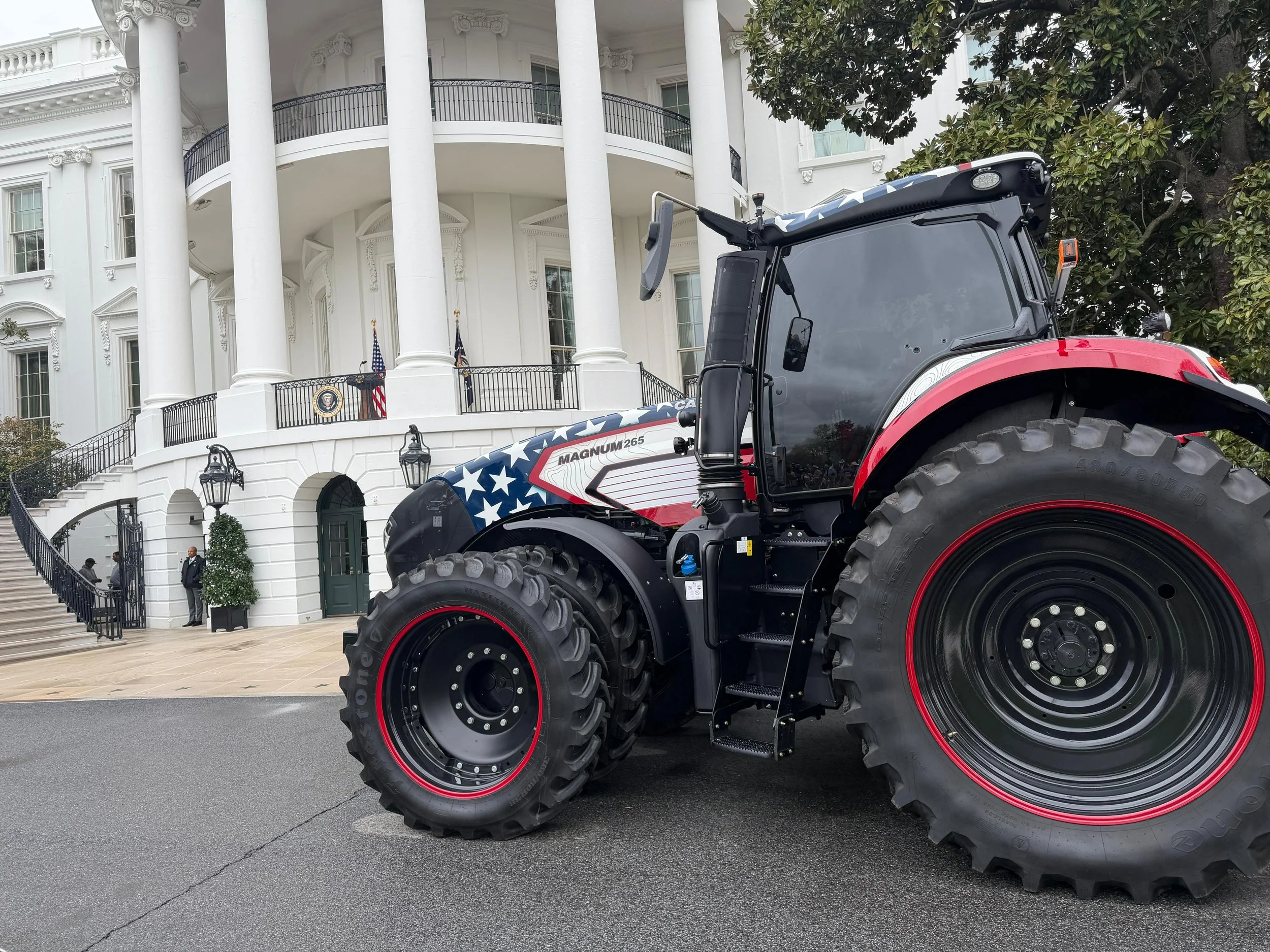
“I received the opportunity to attend the Great American Agriculture Celebration located on the White House south lawn. This event included farmers, influencers, politicians, and agricultural leaders from around the country. President Trump addressed the attentive group as tractors were parked on the White House lawn. He drew special attention to the FFA and 4-H groups seated in the front rows. Trump spoke on the subjects of year-round E15, eliminating Def on tractors and construction equipment, elimination of the death tax, and providing additional financial support to help overcome the high price of fertilizer. I felt as if the President understood what concerns were for the agricultural industry and promised to correct the obstacles that we face today to make a living. Secretary Rollins also addressed the crowd and thanked President Trump for his efforts in helping farmers. It was an honor and a privilege to attend this event, and it will be something that I will always remember. ”