Agtegra Seminar on Rural Vitality & Entrepreneurs
Day 1 - Jan. 13, 2026
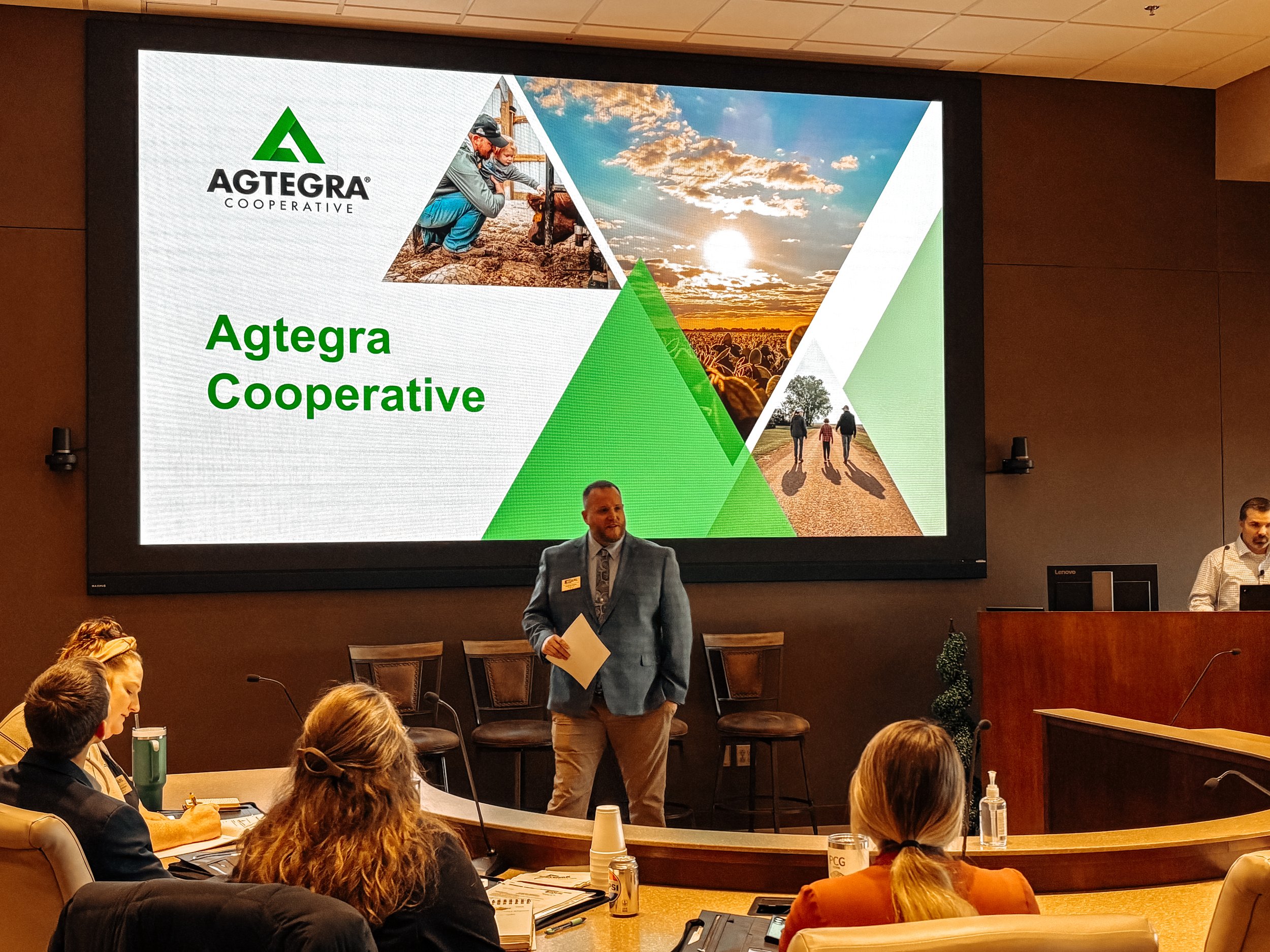
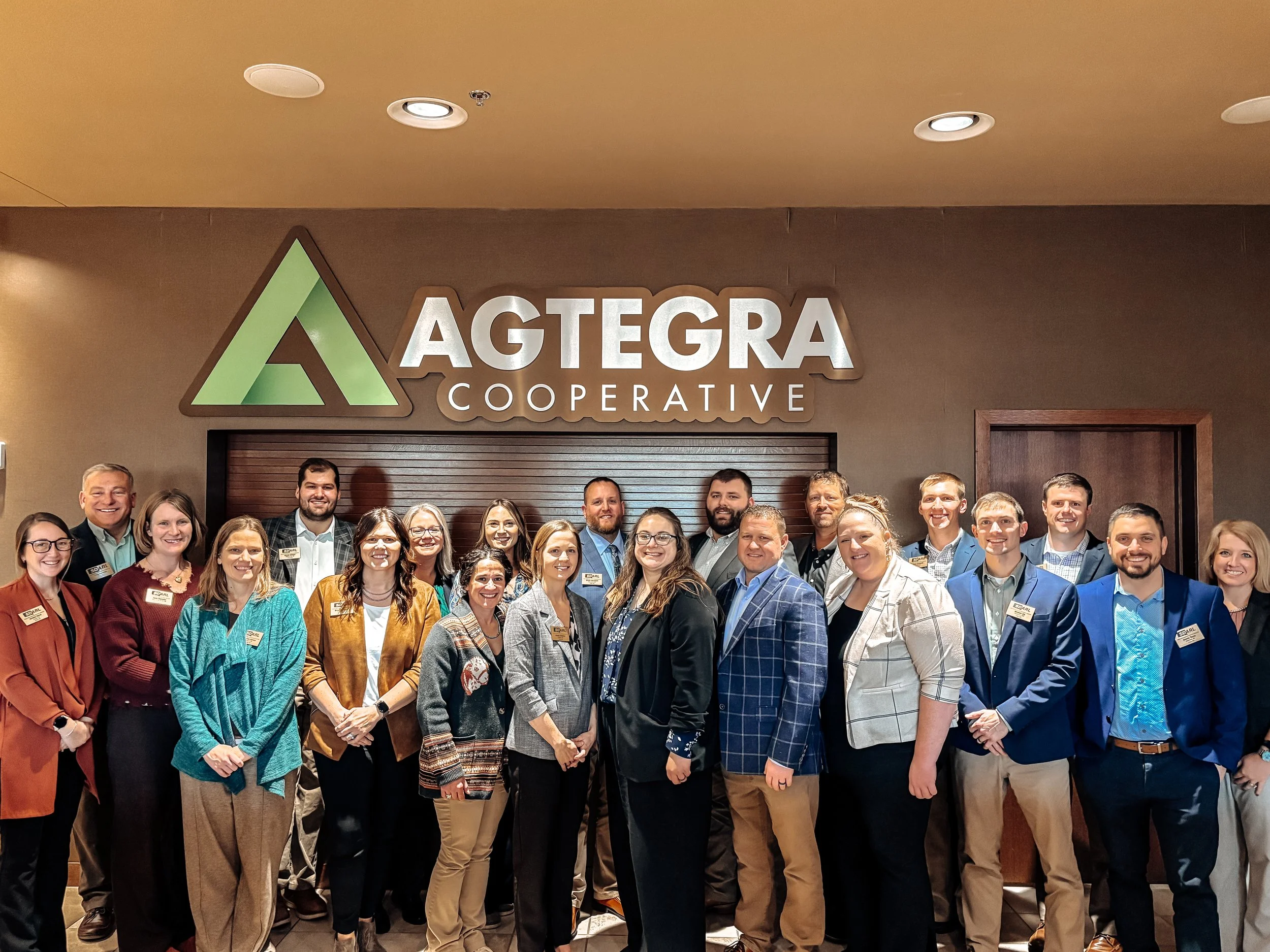
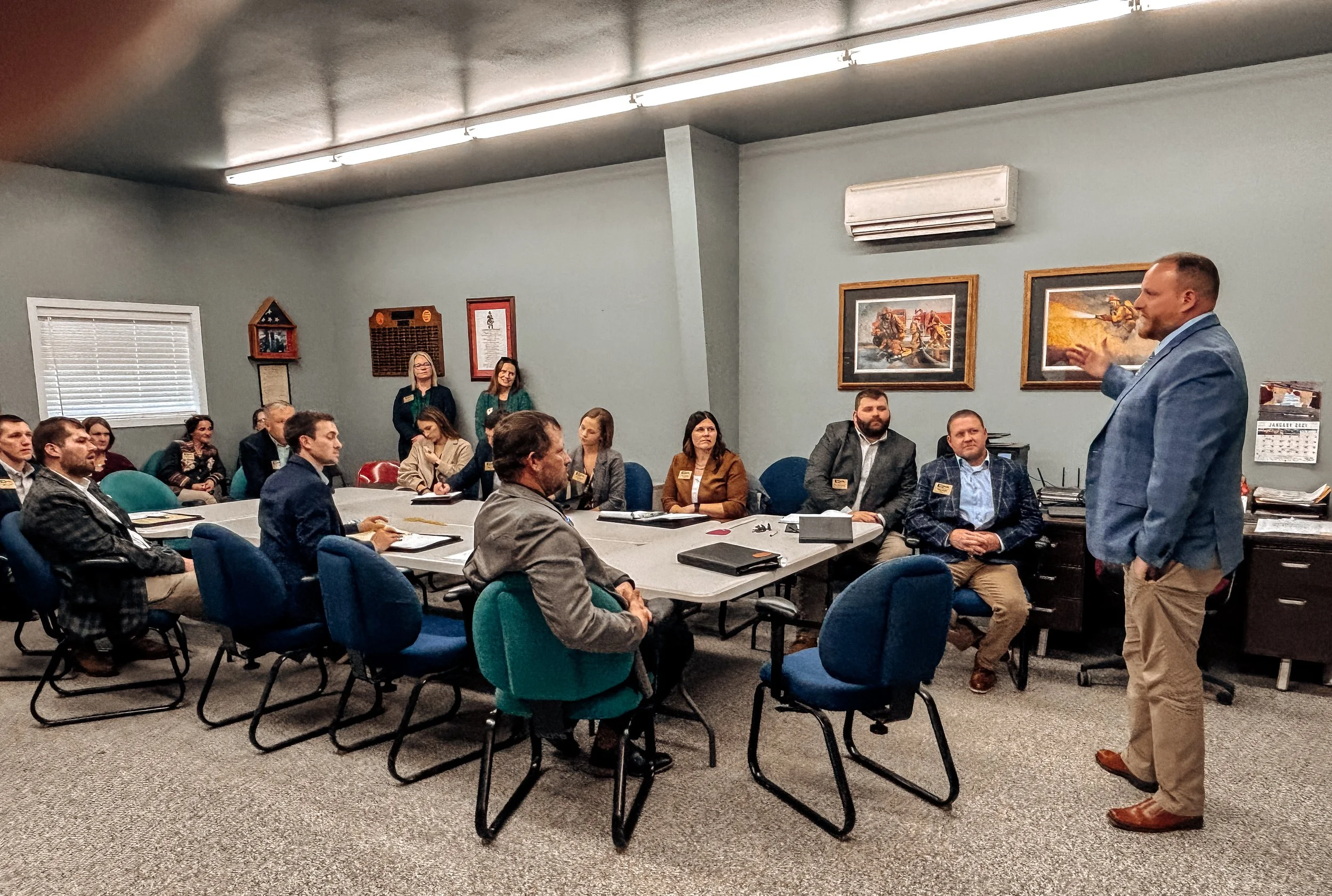
The day began at the Agtegra headquarters in Aberdeen, South Dakota. The focus of the seminar was on maintaining vibrant rural communities while learning about entrepreneurship, agricultural cooperatives, and rural leadership. The first speaker was Travis Antonsen (SDARL Class V), Senior Vice President of Grain Marketing and Rail Logistics.. He guided the class through Agtegra’s values, vision, and mission within the leadership team. He provided insight into the inner workings of Agtegra and explained the cooperative system’s role in agriculture, including examples of where and how certain commodities are stored and shipped—from arriving on a producer’s truck to reaching shipping ports and export elevators. Antonsen gave a thorough explanation of Agtegra’s services, products, and member benefits, as well as its vested interests in other companies, such as an export elevator and Prescription Agronomics in Ipswich.
Mike Traxinger (SDARL Class VII), SVP & General Counsel, also spoke about Agtegra’s cooperative business structure and shared examples of what the cooperative does for its communities, members, and employees. He explained Agtegra’s joint venture agreements with other cooperatives and provided examples of how they work together. Agtegra’s leadership structure was outlined, from the duties of its fifteen directors (along with two advisory, non-voting directors) to its sixty elected delegates. An interesting point noted was that seven of the fifteen board members are SDARL alumni.
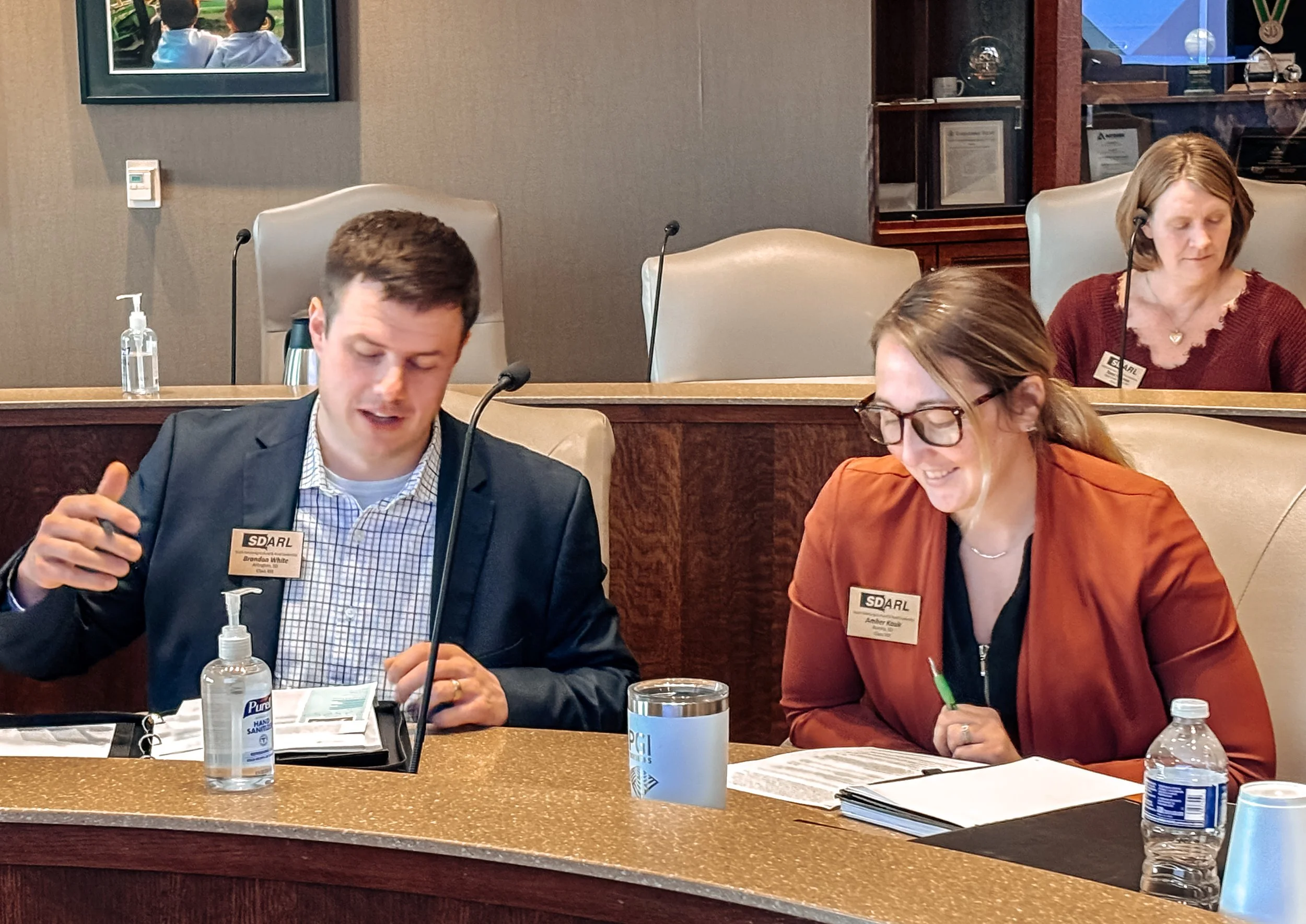
Later in the morning, the class participated in an exercise focused on developing and delivering an effective speaker introduction. Class members were paired together, and each person was given their partner’s biography and resume. Using those documents as references, each participant created an introduction for their partner and presented it to the class. The exercise served as a valuable reminder of the importance and nuances of proper introductions, while also providing an opportunity for class members to learn more about one another.
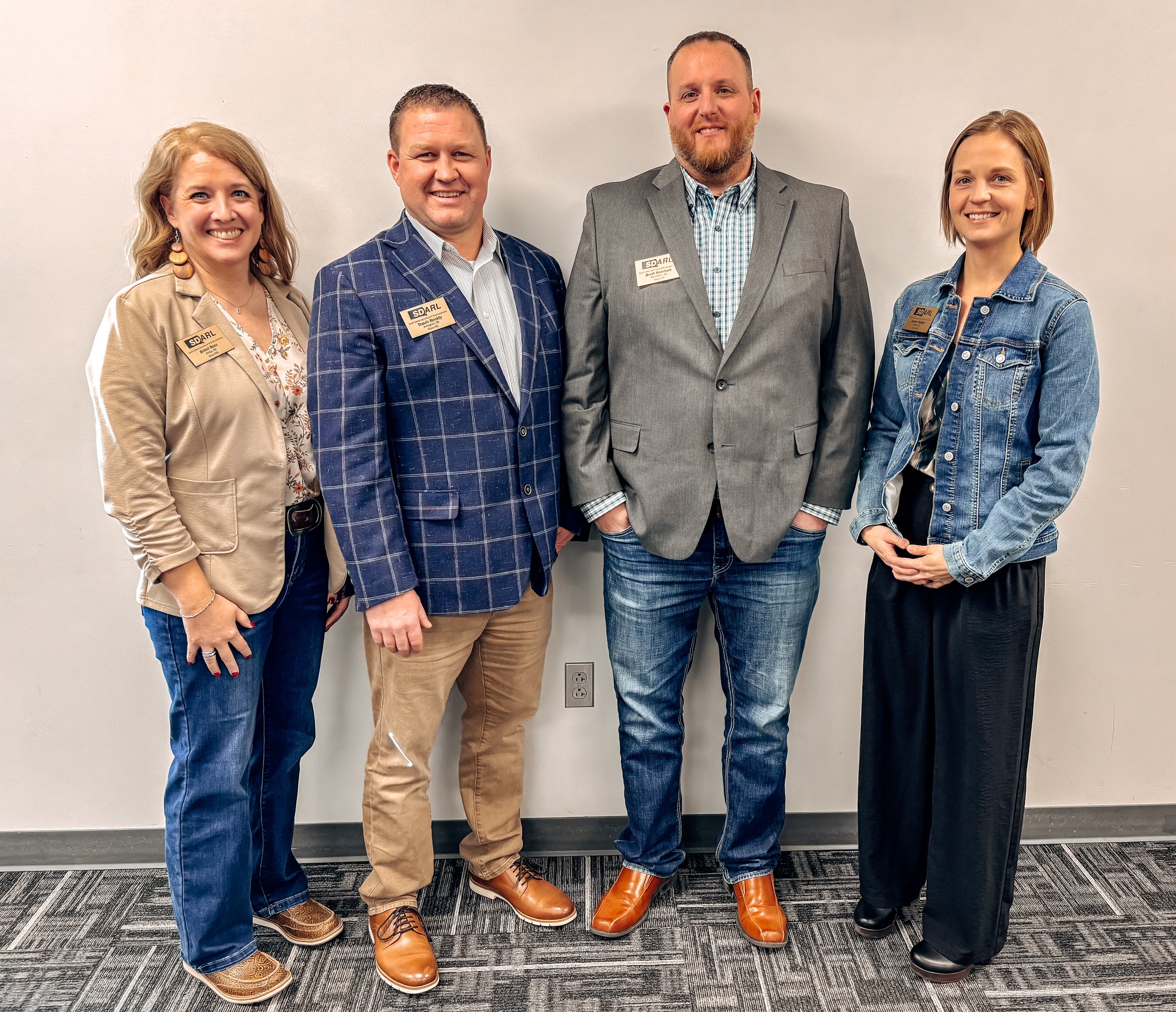
After lunch, the class traveled to the fire hall in Groton to learn more about the inner workings of rural fire departments. Seminar Team Leader Travis Renkly, who is also a volunteer firefighter, explained his role within the Volga Volunteer Fire Department and described how different fire and EMS departments are structured and funded. He emphasized the importance of funding, citing the high costs associated with equipment updates. The class discussed the shortage of EMS services in South Dakota’s rural communities and highlighted leadership efforts currently working to address the issue. The perfect example of entrepreneurship, Renkly shared his background and the life decisions that led to his business of building custom fire trucks for fire departments. The class was then shown an example of his work currently owned by the Groton Volunteer Fire Department.
Brett Harrison, also a Seminar Team Leader and entrepreneur, spoke about his career path, from starting his own business to eventually becoming the Director of Crop Protection at Agtegra. His diverse background across many areas of agriculture proved to be a series of worthwhile experiences that ultimately shaped a fulfilling career. His story reinforced the idea that with strong leadership, working for a cooperative can help employees feel invested in the organization and increase overall job satisfaction.
SDARL alumni Terry Jaspers (Class III) of Sisseton and Jarrett Rix (Class XI) of Aberdeen were also in attendance at the session held at the Groton Fire Hall and shared words of wisdom with Class XIII.
After returning to Aberdeen, the class and alumni joined Agtegra directors and delegates for supper at Mavericks. The class gained additional insight into the inner workings of Agtegra and agricultural economics through more intimate dinner conversation, and took in stories of alumni recounting their SDARL experiences. Class members were then dismissed to rest and prepare for the day ahead.
Day 2 - Jan. 14, 2026
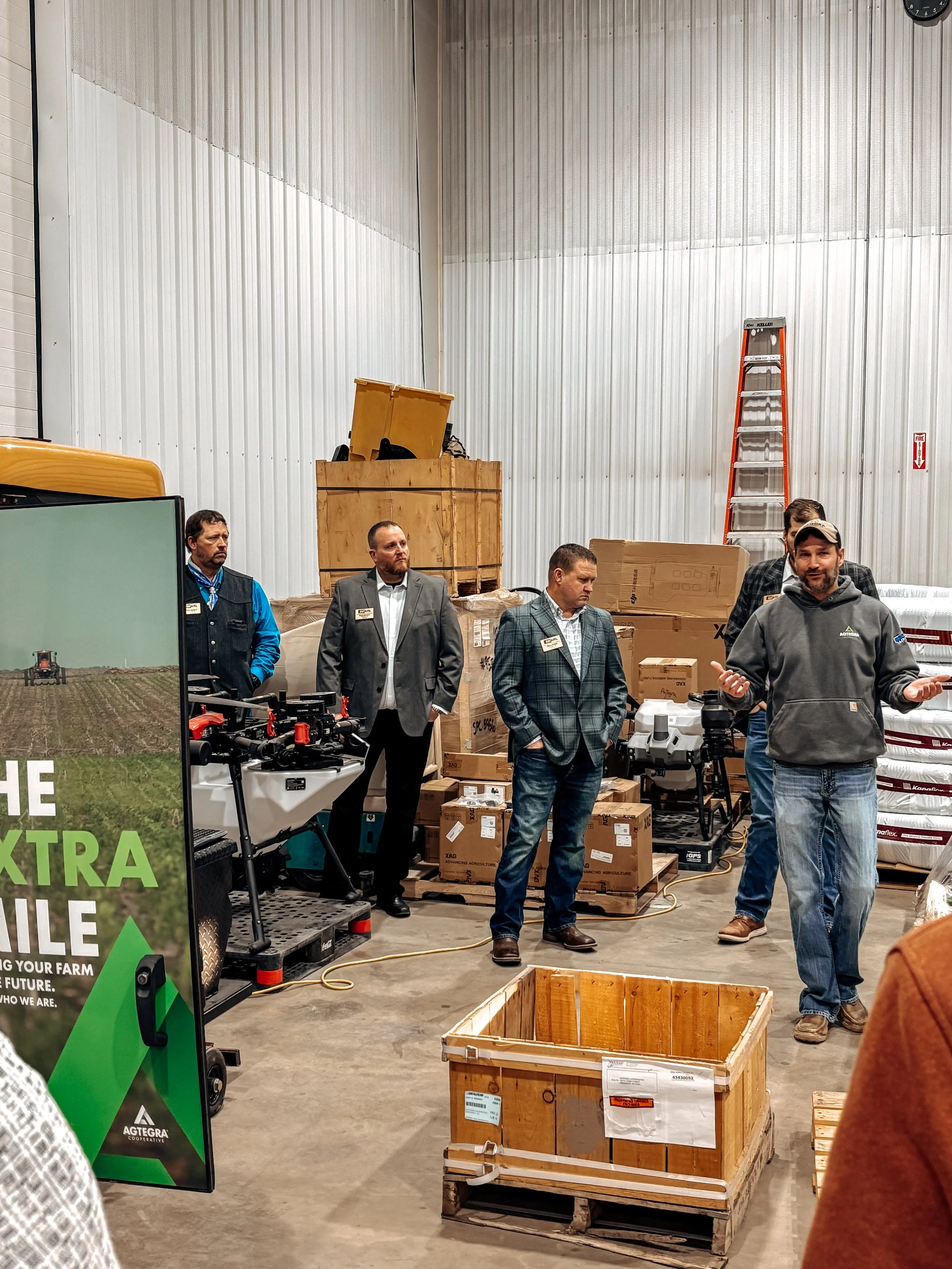
The day began at the Agtegra Innovation Center in Bath, South Dakota. The Innovation Center employs a team of technicians who provide equipment updates, parts, and on-farm service and support to producers. The first speaker, Lance Larsen (SDARL Class X), Innovation Center Manager, explained that the team essentially serves as the “Geek Squad for farmers.” They custom-fit aftermarket parts to any brand of equipment and develop solutions for unique challenges within a farmer’s operation. The class was guided through different areas of the shop and observed an equipment simulator, which trains both farmers and Innovation Center employees on new equipment without ever stepping foot in the field. Larsen reflected on his experience with SDARL, noting that he had not realized his leadership skills in mentoring and developing others until participating in the program. He also acknowledged that speaking confidently to a group would not have been possible without his SDARL experience.
Afterward, Class XIII traveled to the Agtegra location in Mellette, where we were greeted by Lon Siefken, who provided a tour of the shop. The Mellette location sells primarily corn and soybean seed and agricultural chemicals. Siefken explained the process of storing, mixing, and distributing chemicals to farmers, including sprays, fertilizers, and seed inoculants. Special tools for loading and unloading trucks were demonstrated, emphasizing Agtegra’s commitment to employee and farmer safety while handling chemicals and seed.
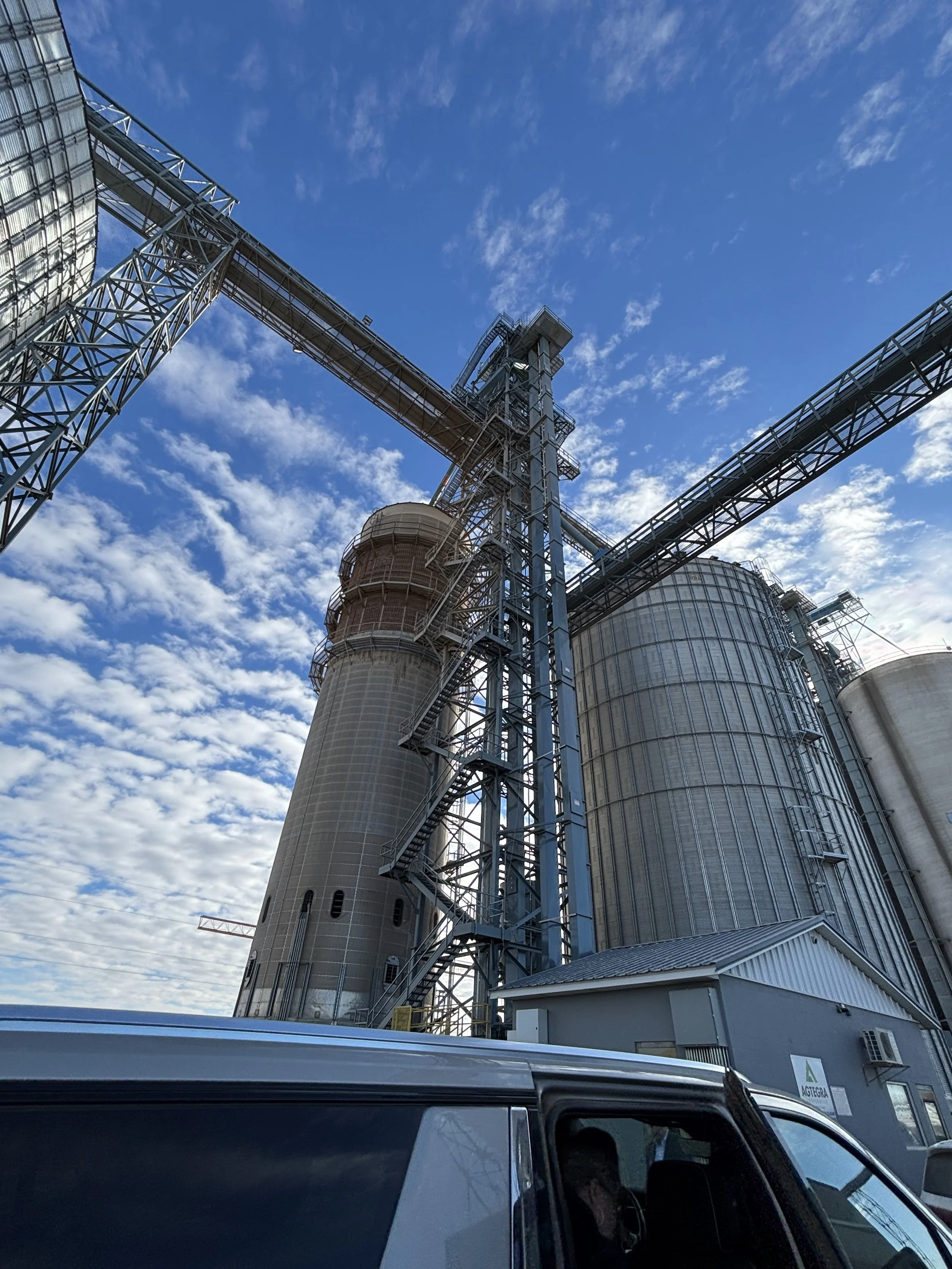
Next, the class met Jonathan Knight, the Area Manager. Knight proudly highlighted that the Mellette location is considered the most efficient among Agtegra’s 70+ sites. He emphasized Agtegra’s “cross-training matrix,” which enables team members to become proficient in multiple skills. After a brief session in the shop discussing the dynamics of grain storage, the class took a short drive through the facility, observing the massive piles of grain stored under tarps. They also toured the control room, where each storage area is closely monitored and regulated via a large flat-screen display, and load-out of grain onto rail cars is managed.
Following a quick lunch on the go, the class paused to reflect on the morning’s tours and consider how understanding a company’s vision influences employees at every level. The group shared varied experiences of employers who effectively live out their visions as well as those who have fallen short of their commitments to their employees.
The final tour of the day took place at Dakota Provisions, located outside Huron. Dakota Provisions is a large processing facility established by local Hutterite colonies to address previously unmet turkey processing needs. The plant processes an average of 41 turkeys per minute – a staggering 20,000 birds per day. The workforce consists largely of EB-3 visa immigrant workers. The class observed the processing line, where turkey carcasses were chilled, de-winged, deboned, ground, and packaged in multiple forms.
After a full day of tours, the class quickly chatted about how the immigrant work force and Dakota Provisions has changed Huron, and how city and county leaders have responded to the increased demand for new infrastructure. Finally, everyone relaxed at Chip Shot Golf and Games in Huron. Participants enjoyed supper, golf simulators, and darts while further developing connections with one another.

Day 3 - Jan. 15, 2026
On the final day of the seminar, SDARL Class XIII members, though tired from darts and golf the evening before, were still eager to begin the day at the South Dakota State Fairgrounds in Huron.
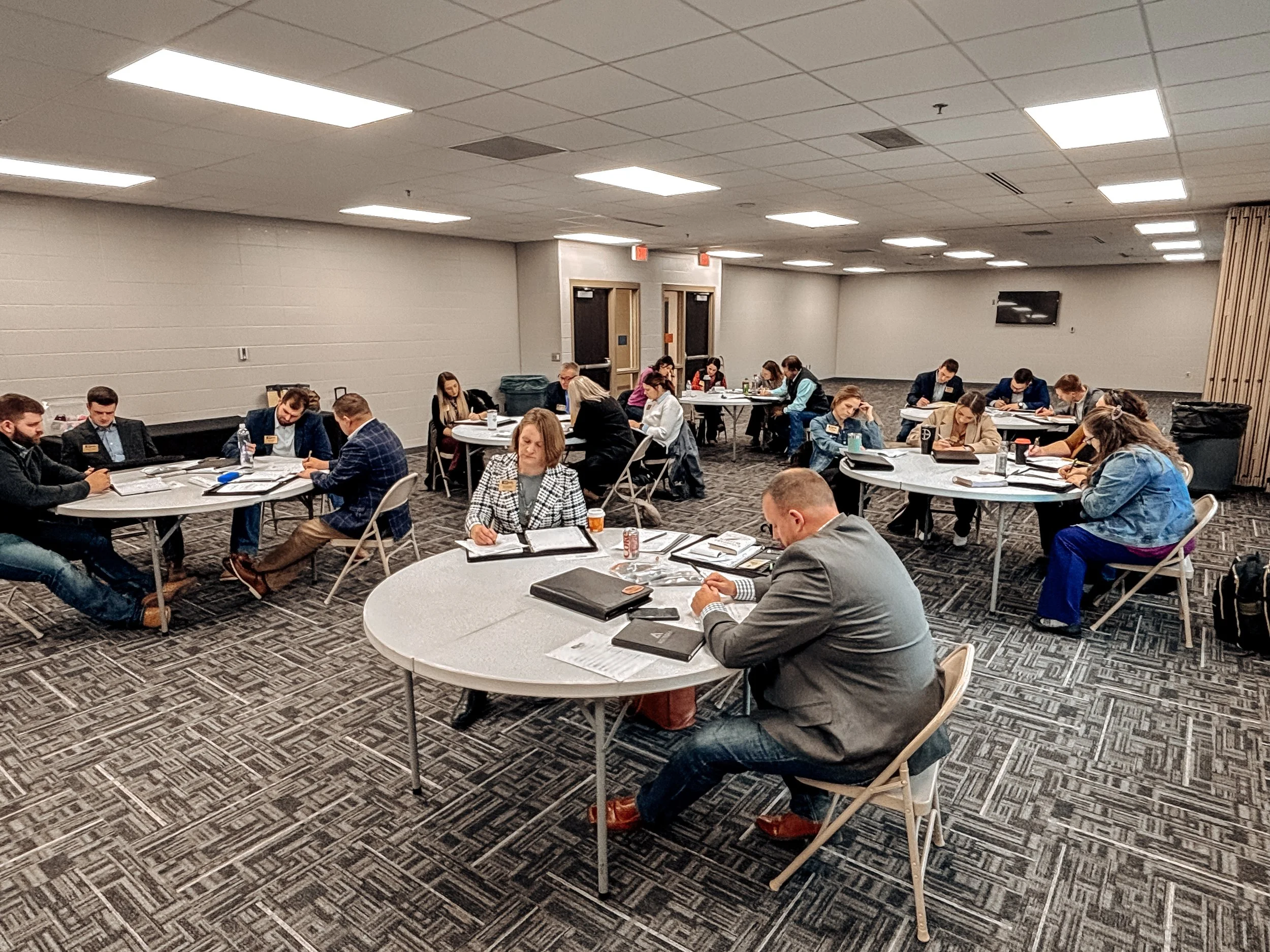
In the weeks prior to the seminar, the class had been assigned the book The Compass Within by Robert Glazer. Within the book, the author provided instructions for a short exercise designed to help readers identify and prioritize their core values. Program Director Jennifer Henrie (SDARL Class IX) guided the class through that exercise. Collectively, the class also revisited the values we wanted to prioritize throughout our SDARL experience and adjusted how we perceived those values after completing the assignment.
Next, Chase Moon, a Community Vitality Field Specialist with SDSU Extension, shared his knowledge of community development and led discussion on the benefits and challenges communities face with growth and change. The back-and-forth between Moon and the class brought forward real-life accounts of economic development, sustaining community vitality, and the role entrepreneurship plays in community development. Moon highlighted programs offered by SDSU Extension that enable local leaders to navigate the hurdles they face to bring about change.
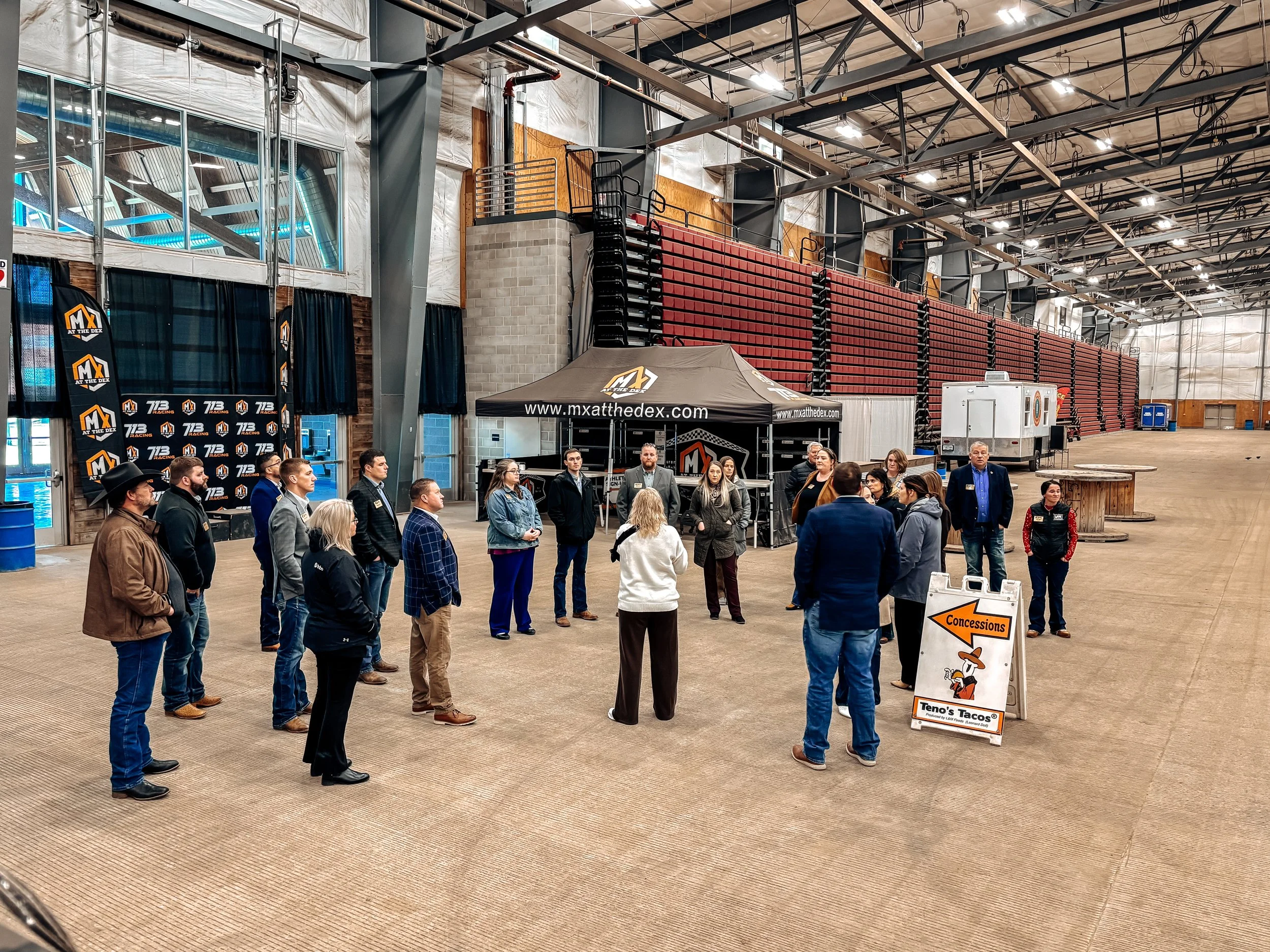
The theme of community development and vitality continued as the class learned about fundraising from Peggy Besch, South Dakota State Fairgrounds Manager, and Jim White, fundraising committee chair and former legislator. Together, they spearheaded a successful fundraising campaign to build what became the Dakota Events Center (DEX) after the former Beef Complex at the fairgrounds was lost to a devastating fire in 2020. After the legislature approved $12 million toward the project, the fundraising committee ran a grassroots campaign to raise the additional $4 million needed to complete the facility. They shared tips, tactics, and printed materials that helped them accomplish that goal. Afterwards, the class walked to the completed DEX facility for a brief tour.
To round out the final day, the class reflected upon the seminar’s theme of vision. We identified ways to apply what we learned to our work and home lives. After briefly preparing for the upcoming seminar in Pierre, everyone said their goodbyes and headed for home.
By Seminar Reporter Annie Walker
Photos courtesy of Britni Ross
Special thanks to Seminar Team Leaders Brett Harrison and Travis Renkly